Hazard
Danger
Hydrofluoric acid Supplier & product listings
No active product listings for this chemical yet.
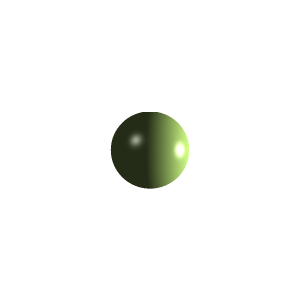
1.75×
Fluorine atom is a halogen. It has a role as a micronutrient.
3D conformer
Hydrofluoric acid Formula
- CAS Number
- 7664-39-3
- Molecular formula
- FH
- Molecular weight
- 20.0064
- Exact mass
- 20.006228194
- IUPAC name
- fluorane
- SMILES
F- InChI
InChI=1S/FH/h1H- InChIKey
KRHYYFGTRYWZRS-UHFFFAOYSA-N
Data source: Pubchem
view
Hydrofluoric acid Industries & Uses
Steel Producing
Acid and Alkali Cleaning of Metals
Electroplating
Petroleum Production and Refining
Semiconductor Manufacturing
Glass Manufacturing
Enameling
Glassblowing
Hydrofluoric acid Synonyms (115 total)
12381-92-9
231-634-8
[2H]hydrogen fluoride
32057-09-3
37249-79-9
7664-39-3
Acide fluorhydrique
Acide fluorhydrique [French]
Acid, Fluohydric
Acid, Fluorhydric
Acid, Hydrofluoric
Acido fluorhidrico
Acido fluorhidrico [Spanish]
Acido fluoridrico
Acido fluoridrico [Italian]
Acidum Fluoricum
AKOS024438092
Anhydrous hydrogen fluoride
Antisal 2B
Aqueous hydrogen fluoride
BDBM50499187
Caswell No. 484
CHEBI:29228
CHEBI:37143
CHEMBL1232767
DB11072
DTXCID8029600
DTXSID1049641
EC 231-634-8
EINECS 231-634-8
EPA Pesticide Chemical Code 045601
Fluohydric Acid
fluorane
Fluorhydric acid
fluoric acid
Fluoride, Hydrogen
fluoridohydrogen
fluoroorganic compound
fluoroorganics
fluororganische Verbindungen
Fluorowodor
Fluorowodor [Polish]
fluorum
fluorure d'hydrogene
Fluorure d'hydrogene anhydre
Fluorure d'hydrogene anhydre [French]
Fluoruro de hidrogeno anhidro
Fluoruro de hidrogeno anhidro [Spanish]
Fluorwasserstoff
Fluorwasserstoff [German]
Fluorwaterstof
Fluorwaterstof [Dutch]
[HF]
HSDB 546
HYDROFLUORIC ACID
Hydrofluoric acid 48%
Hydrofluoric acid, 48% ACS reagent
Hydrofluoric acid, 48 wt. % in H2O, >=99.99% trace metals basis
Hydrofluoric acid, 55%, CP
Hydrofluoric acid 70% by weight or more HF
HYDROFLUORIC ACID, ACS
Hydrofluoric acid, ACS reagent, 48%
Hydrofluoric acid, anhydrous
Hydrofluoric acid, AR, >=40%
Hydrofluoric acid, for ultratrace analysis, 47-51% (T)
HYDROFLUORIC ACID [HSDB]
Hydrofluoric acid, JIS special grade
Hydrofluoric acid, LR, 39-43%
HYDROFLUORIC ACID [MART.]
HYDROFLUORIC ACID [MI]
Hydrofluoric acid, p.a., ACS reagent, reag. ISO, reag. Ph. Eur., 48.0-51.0%
Hydrofluoric acid, puriss. p.a., ACS reagent, reag. ISO, reag. Ph. Eur., >=48%
Hydrofluoric acid, puriss. p.a., reag. ISO, reag. Ph. Eur., >=40%
Hydrofluoric acid, SAJ first grade
Hydrofluoric acid, semiconductor grade MOS PURANAL(TM) (Honeywell 17928), 49.5-50.5%
Hydrofluoric acid, semiconductor grade PURANAL(TM) (Honeywell 17735), 40-41%
Hydrofluoric acid, semiconductor grade VLSI PURANAL(TM) (Honeywell 17601)
Hydrofluoric acid, technical, 40-45%
Hydrofluoric acid, technical grade, 68.0%
HYDROFLUORIC ACID [VANDF]
HYDROFLUORIC ACID [WHO-DD]
Hydrofluoric acid, with more than 60% strength
Hydrofluoric acid, with more than 60% strength [UN1790] [Corrosive]
Hydrofluoric acid, with not more than 60% strength
Hydrofluoric acid, with not more than 60% strength [UN1790] [Corrosive]
Hydrofluoricum acidum
HYDROFLUORICUM ACIDUM [HPUS]
Hydrofluoride
hydrogen flouride
Hydrogenfluorid
hydrogenfluoride
Hydrogen fluoride
Hydrogen-fluoride
Hydrogen fluoride, anhydrous
Hydrogen fluoride, anhydrous [UN1052] [Corrosive]
Hydrogen fluoride (HF)
Hydrogen fluoride/Hydrofluoric acid (conc 50% or greater)
HYDROGEN FLUORIDE [MI]
hyrofluoric acid
MFCD00011346
NS00076201
NSC 750679
NSC-750679
NSC750679
organofluorine compound
Q2468
RCRA waste no. U134
RCRA waste number U134
RefChem:6444
RGL5YE86CZ
Rubigine
UN1052
UN 1052 (anhydrous)
UNII-RGL5YE86CZ
YCKRFDGAMUMZLT-UHFFFAOYSA-N
Hydrofluoric acid Safety & hazards
Signal wordDanger
Hazard statements
- H300: Fatal if swallowed [Danger Acute toxicity, oral]
- H310: Fatal in contact with skin [Danger Acute toxicity, dermal]
- H314: Causes severe skin burns and eye damage [Danger Skin corrosion/irritation]
- H330: Fatal if inhaled [Danger Acute toxicity, inhalation]
- H300 (99.8%): Fatal if swallowed [Danger Acute toxicity, oral]
- H310 (99.8%): Fatal in contact with skin [Danger Acute toxicity, dermal]
- H314 (> 99.9%): Causes severe skin burns and eye damage [Danger Skin corrosion/irritation]
- H318 (19.4%): Causes serious eye damage [Danger Serious eye damage/eye irritation]
- H330 (99.8%): Fatal if inhaled [Danger Acute toxicity, inhalation]
- H280: Contains gas under pressure; may explode if heated [Warning Gases under pressure]
- H318: Causes serious eye damage [Danger Serious eye damage/eye irritation]
- H370: Causes damage to organs [Danger Specific target organ toxicity, single exposure]
- H372: Causes damage to organs through prolonged or repeated exposure [Danger Specific target organ toxicity, repeated exposure]
- H290: May be corrosive to metals [Warning Corrosive to Metals]
- H311: Toxic in contact with skin [Danger Acute toxicity, dermal]
- H331: Toxic if inhaled [Danger Acute toxicity, inhalation]
- H402: Harmful to aquatic life [Hazardous to the aquatic environment, acute hazard]
- H317: May cause an allergic skin reaction [Warning Sensitization, Skin]
- H341: Suspected of causing genetic defects [Warning Germ cell mutagenicity]
Data sourced from PubChem