A Smarter Way to Source Surplus Chemicals
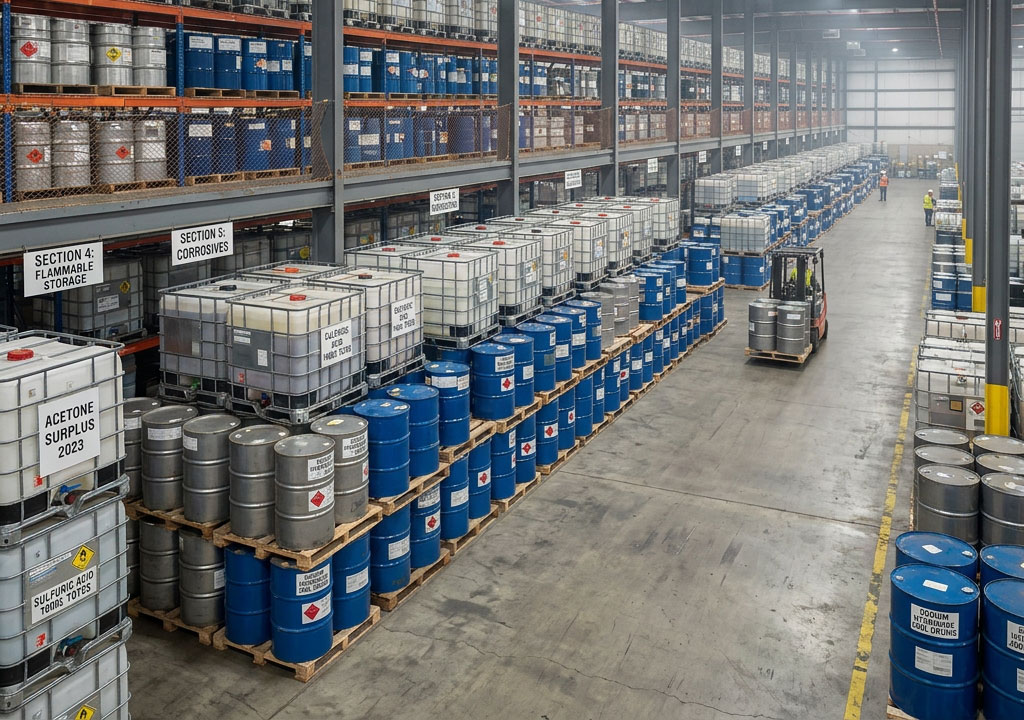
Surplus Chemicals: A Practical Guide to Sourcing Excess Chemical Inventory
Chemical manufacturers, suppliers and distributors often hold inventory that is no longer required for their immediate production or sales plans. This may include excess production, overstocked raw materials, discontinued products, slow-moving inventory, cancelled orders or batches that are still commercially usable.
This inventory is commonly referred to as surplus chemicals.
For buyers, surplus chemicals can create an opportunity to source required materials at competitive prices. For manufacturers and suppliers, listing surplus inventory can help recover working capital, reduce storage requirements and connect with buyers who have specific chemical requirements.
As chemical supply chains become increasingly global, businesses in India and international markets are looking for more efficient ways to discover available chemical inventory beyond traditional supplier networks.
What Are Surplus Chemicals?
Surplus chemicals are chemical products or raw materials that a manufacturer, supplier, distributor or other business has available in excess of its current requirement.
Surplus inventory can arise for many reasons, including:
-
Excess production
-
Overestimated demand
-
Cancelled purchase orders
-
Changes in manufacturing requirements
-
Product reformulation
-
Discontinued products
-
Slow-moving inventory
-
Project completion
-
Excess imported stock
-
Packaging or batch-size changes
-
Procurement mistakes
-
Customer order cancellations
Surplus does not automatically mean that a chemical is defective or unusable.
However, buyers should always evaluate important information such as chemical identity, CAS number, grade, specification, batch information, quantity, manufacturing date, expiry or retest date where applicable, packaging and documentation before purchasing.
India has a large and diverse chemical manufacturing ecosystem covering commodity chemicals, specialty chemicals, intermediates, solvents, dyes and pigments, agrochemicals, pharmaceutical chemicals and other industrial materials. The Government of India's ChemIndia portal also maintains information relating to chemical and petrochemical manufacturing units and chemical inventory data.
Why Do Companies Buy Surplus Chemicals?
The primary attraction for buyers is availability and commercial value.
A company may need a particular chemical for production but may not want to purchase a full standard quantity from a conventional distributor. If a manufacturer or distributor already has suitable excess stock available, the buyer may be able to source the required material in a smaller or more suitable quantity.
Potential advantages include:
1. Competitive sourcing
Surplus inventory may be available at a different commercial price compared with regular supply, depending on the seller, quantity, age, location and market conditions.
2. Faster availability
Instead of waiting for a new manufacturing batch or import shipment, buyers may find material that is already available in stock.
3. Access to hard-to-find chemicals
Specialty chemicals, intermediates and niche products can sometimes be difficult to source through conventional channels. Surplus inventory can provide an additional sourcing route.
4. Flexible procurement
Manufacturers and industrial buyers may use surplus sourcing when they require a specific quantity rather than a complete production lot.
5. Better inventory utilization
When suitable surplus stock moves from one business to another, an existing chemical inventory can potentially find a productive commercial use rather than remaining idle.
Why Should Chemical Manufacturers and Suppliers List Surplus Stock?
Surplus chemicals are not only a buyer opportunity.
For manufacturers, distributors and chemical traders, unused inventory represents tied-up capital and storage requirements.
Listing available surplus inventory can help businesses:
-
Reach new chemical buyers
-
Generate inquiries for excess stock
-
Reduce slow-moving inventory
-
Recover working capital
-
Promote discontinued or excess products
-
Find buyers outside their existing network
-
Improve inventory visibility
-
Build new B2B relationships
Instead of contacting buyers individually, suppliers can publish the important details of available inventory and allow potential buyers to discover the material based on their requirements.
This is particularly useful when inventory is available in locations such as Gujarat, Maharashtra, Telangana, Tamil Nadu, Andhra Pradesh, Karnataka, Rajasthan, Delhi-NCR and other chemical manufacturing regions in India, as well as international markets.
What Types of Surplus Chemicals Can Be Sourced?
Surplus chemical inventory can exist across many categories.
Depending on the supplier and application, buyers may find:
-
Industrial chemicals
-
Specialty chemicals
-
Solvents
-
Chemical intermediates
-
Pharmaceutical intermediates
-
Agrochemical intermediates
-
Dyes and pigments
-
Resins and polymers
-
Coating chemicals
-
Adhesives and additives
-
Laboratory chemicals
-
Fine chemicals
-
Petrochemical products
-
Performance chemicals
-
Water-treatment chemicals
-
Raw materials for manufacturing
The actual suitability of any surplus chemical depends on its grade, specification, condition, documentation and intended application.
How to Source Surplus Chemicals Safely
Price should not be the only consideration when sourcing surplus chemicals.
A structured sourcing process can help buyers evaluate available inventory more effectively.
Step 1: Identify the Exact Chemical
Start with the chemical name and, wherever possible, the CAS number.
Chemical names can vary between suppliers and markets. A CAS number can help reduce ambiguity when identifying a substance.
For example, a sourcing requirement should ideally specify:
Chemical: Product name
CAS: CAS number
Required quantity: 500 kg
Grade: Industrial / Technical / Pharma / Other
Application: Intended use
Location: Preferred delivery location
Step 2: Specify Quantity and Location
Quantity is particularly important in surplus sourcing.
A supplier may have 200 kg, 2 MT or 20 MT available. The buyer should clearly communicate the required quantity and preferred delivery location.
Location can also influence the total sourcing cost because transportation, hazardous-goods handling and logistics requirements may vary significantly.
Step 3: Ask for Product Documentation
Before purchasing, buyers should request appropriate documentation for the material.
Depending on the product and application, this may include:
-
Certificate of Analysis (CoA)
-
Safety Data Sheet (SDS)
-
Product specification
-
Batch information
-
Manufacturing date
-
Retest or expiry information where applicable
-
Packing details
-
Origin information
-
Regulatory documentation where applicable
For regulated or controlled chemicals, additional requirements may apply.
For example, India's National Crime Records Bureau notes that specified precursor chemicals are subject to controls covering activities such as manufacturing, distribution, sale, import and export.
Surplus Chemicals vs. Expired Chemicals
One of the most important distinctions in chemical sourcing is that surplus does not mean expired.
Surplus inventory may simply be excess or slow-moving stock that remains suitable for its intended application.
Buyers should separately evaluate:
Surplus stock: Excess or unwanted inventory that may still be commercially usable.
Near-expiry or short-dated stock: Material approaching its applicable expiry/retest date and requiring additional evaluation.
Expired stock: Material whose labelled expiry or applicable validity period has passed. It should not simply be treated as ordinary surplus inventory.
The seller should clearly disclose relevant dates and product condition rather than relying only on the word "surplus."
What Should a Surplus Chemical Listing Include?
A useful surplus chemical listing should provide enough information for a potential buyer to decide whether to make an inquiry.
At minimum, consider including:
-
Chemical/product name
-
CAS number
-
Grade
-
Available quantity
-
Unit of measurement
-
Location
-
Packing type
-
Batch information
-
Manufacturing date
-
Expiry/retest information where applicable
-
Specification
-
CoA availability
-
SDS availability
-
Indicative price or pricing method
-
Supplier/company information
The better the product information, the easier it becomes for buyers to identify relevant inventory.
How ChemEnrich Can Help With Surplus Chemical Sourcing
ChemEnrich is a B2B chemical industry platform designed to connect chemical businesses and facilitate chemical discovery and sourcing.
For buyers, the objective is to make it easier to discover chemical products and connect with relevant manufacturers, suppliers and distributors.
For chemical businesses with excess inventory, listing surplus chemicals can provide another channel to reach potential B2B buyers.
A manufacturer or supplier can create a supplier profile and showcase its products, capabilities and available chemical inventory.
Who Can Benefit?
Chemical Manufacturers
Manufacturers can list excess production, available batches and other commercially available chemical products.
Chemical Suppliers
Suppliers can promote available inventory and connect with businesses searching for specific chemicals.
Chemical Distributors
Distributors can use surplus inventory listings to reach additional buyers across India and international markets.
Chemical Buyers
Procurement teams can use chemical requirements and product information to identify potential sourcing opportunities.
Why Digital Sourcing Matters for the Chemical Industry
Traditional chemical sourcing often depends heavily on personal networks, phone calls, emails and long-term supplier relationships.
Those relationships remain important, but digital discovery can expand the sourcing process.
A buyer looking for a particular chemical may want to compare:
-
Multiple suppliers
-
Available locations
-
Quantity
-
Product specifications
-
Grade
-
Availability
-
Supplier information
-
Commercial terms
Similarly, a supplier with surplus stock may have the right material but no direct connection with the company that needs it.
A B2B chemical platform can help bridge this discovery gap.
The Indian government itself maintains digital infrastructure for chemical-sector information, including manufacturing units, chemical classifications and industry data, demonstrating the importance of structured digital information in the sector.
How to Get Started With Surplus Chemical Sourcing
If you are a buyer, start by preparing a clear requirement:
Chemical + CAS Number + Quantity + Grade + Location + Application
For example:
Looking for 2 MT of [Chemical Name], CAS [Number], industrial grade, delivery to Mumbai, Maharashtra.
A detailed requirement can make it easier for suppliers to determine whether their available inventory matches your needs.
If you are a manufacturer, supplier or distributor with surplus chemical inventory, prepare your product information and make the available stock discoverable to potential buyers.
Join ChemEnrich as a Chemical Supplier
If your company has surplus chemicals, excess inventory, slow-moving stock or regularly available chemical products, you can create a supplier profile on ChemEnrich and start building your digital presence in the chemical B2B market.
Register as a Chemical Supplier on ChemEnrich
A well-structured supplier profile can help buyers understand what your company supplies and make it easier to start a business inquiry.
Final Thoughts
The market for surplus chemicals can create opportunities for both sides of the chemical supply chain.
For buyers, surplus inventory can provide another route to discover available materials, potentially improve sourcing flexibility and find products that may not be immediately available through conventional procurement channels.
For manufacturers, suppliers and distributors, surplus inventory can become an opportunity to reach new customers instead of remaining hidden inside warehouses or internal inventory systems.
The key is transparency.
Chemical name, CAS number, quantity, grade, location, dates, documentation and product specifications should be clearly communicated. Buyers should independently verify the material, supplier, documentation, regulatory requirements and suitability for their intended application before completing a transaction.
As chemical procurement becomes increasingly digital and global, structured platforms can help manufacturers, suppliers, distributors and buyers discover opportunities across India and international markets.
Have surplus chemical inventory to sell?
Create your supplier profile on ChemEnrich and make your chemical products discoverable to B2B buyers.