antimony trifluoride Chemical Formula
trifluorostibane
antimony trifluoride CAS No: 7783-56-4 antimony trifluoride Molecular formula: F3Sb PubChem CID: 24554
Hazard
Danger
antimony trifluoride Chemical Manufacturers and suppliers listings
No active product listings for antimony trifluoride chemical yet.
antimony trifluoride Structure
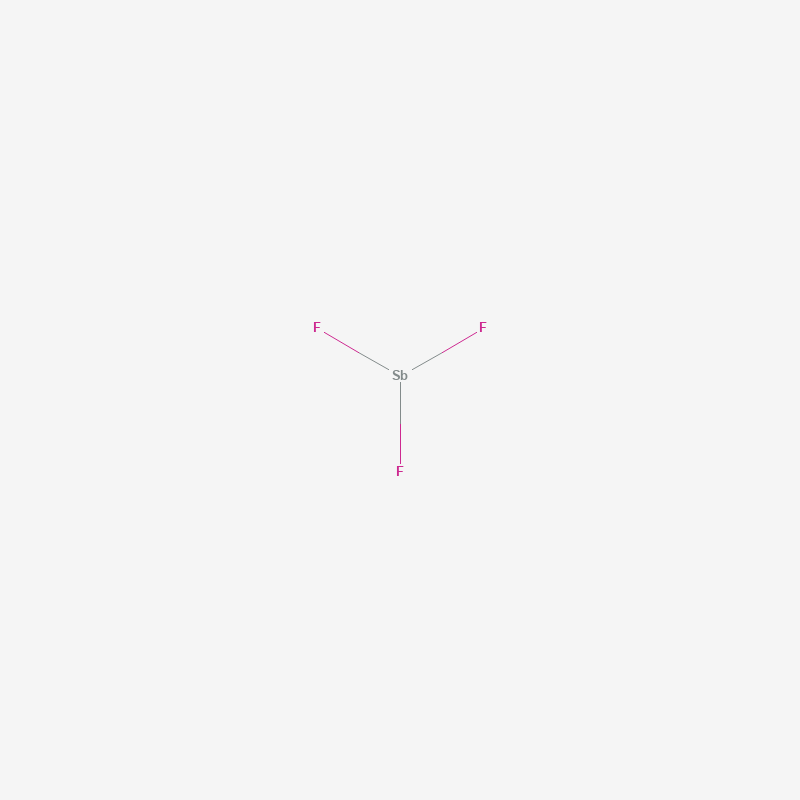
1.25×
antimony trifluoride Formula
- CAS Number
- 7783-56-4
- Molecular formula
- F3Sb
- Molecular weight
- 178.755
- Exact mass
- 177.89902
- IUPAC name
- trifluorostibane
- SMILES
F[Sb](F)F- InChI
InChI=1S/3FH.Sb/h3*1H;/q;;;+3/p-3- InChIKey
GUNJVIDCYZYFGV-UHFFFAOYSA-K
Data source: Pubchem
view
antimony trifluoride Industries & Uses
Electroplating
Textiles (Printing, Dyeing, or Finishing)
Ceramics making
antimony trifluoride Synonyms (29 total)
127386-54-3
7783-56-4
AKOS015833663
Antimoine fluorure
Antimoine fluorure [French]
Antimonous fluoride
Antimony fluoride
Antimony (III) fluoride
Antimony(III) fluoride
Antimony(III) fluoride (1:3)
Antimony(III) fluoride, 98%
ANTIMONY TRIFLUORIDE
Antimony trifluoride, solid
DTXSID1064827
EINECS 232-009-2
HSDB 438
SBB089491
SCHEMBL81458
Stibine, trifluoro-
Trifluoroantimony
Antimony(III) fluoride, powder, 99.8% trace metals basis
Antimony trifluoride, solid [NA1549] [Corrosive]
Antimony trifluoride, solid [NA1549] [Corrosive]
Q419591
SbF3
trifluorostibane
Trifluorostibine
UNII-VWM00O92AM
VWM00O92AM
antimony trifluoride Safety & hazards
Signal wordDanger
Hazard statements
- H301: Toxic if swallowed [Danger Acute toxicity, oral]
- H311: Toxic in contact with skin [Danger Acute toxicity, dermal]
- H331: Toxic if inhaled [Danger Acute toxicity, inhalation]
- H411: Toxic to aquatic life with long lasting effects [Hazardous to the aquatic environment, long-term hazard]
- H301+H311+H331 (31.9%): Toxic if swallowed, in contact with skin or if inhaled [Danger Acute toxicity, oral; acute toxicity, dermal; acute toxicity, inhalation]
- H301 (100%): Toxic if swallowed [Danger Acute toxicity, oral]
- H311 (100%): Toxic in contact with skin [Danger Acute toxicity, dermal]
- H331 (100%): Toxic if inhaled [Danger Acute toxicity, inhalation]
- H351 (33.3%): Suspected of causing cancer [Warning Carcinogenicity]
- H411 (98.6%): Toxic to aquatic life with long lasting effects [Hazardous to the aquatic environment, long-term hazard]
- H302: Harmful if swallowed [Warning Acute toxicity, oral]
- H315: Causes skin irritation [Warning Skin corrosion/irritation]
- H319: Causes serious eye irritation [Warning Serious eye damage/eye irritation]
- H335: May cause respiratory irritation [Warning Specific target organ toxicity, single exposure; Respiratory tract irritation]
- H351: Suspected of causing cancer [Warning Carcinogenicity]
- H372: Causes damage to organs through prolonged or repeated exposure [Danger Specific target organ toxicity, repeated exposure]
- H314: Causes severe skin burns and eye damage [Danger Skin corrosion/irritation]
- H318: Causes serious eye damage [Danger Serious eye damage/eye irritation]
- H401: Toxic to aquatic life [Hazardous to the aquatic environment, acute hazard]
Data sourced from PubChem