Trichloroacetyl Chloride Chemical Formula
2,2,2-trichloroacetyl chloride
Trichloroacetyl Chloride CAS No: 76-02-8 Trichloroacetyl Chloride Molecular formula: C2Cl4O PubChem CID: 6420
Hazard
Danger
Trichloroacetyl Chloride Chemical Manufacturers and suppliers listings
| Supplier | Product | CAS | Action |
|---|---|---|---|
| Archit Organosys Limited | Trichloroacetyl Chloride Yellow Liquid | 76-02-8 |
Trichloroacetyl Chloride Structure
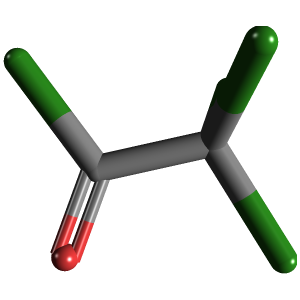
1.25×
3D conformer
Trichloroacetyl Chloride Formula
- CAS Number
- 76-02-8
- Molecular formula
- C2Cl4O
- Molecular weight
- 181.8
- Exact mass
- 181.867375
- IUPAC name
- 2,2,2-trichloroacetyl chloride
- SMILES
C(=O)(C(Cl)(Cl)Cl)Cl- InChI
InChI=1S/C2Cl4O/c3-1(7)2(4,5)6- InChIKey
PVFOMCVHYWHZJE-UHFFFAOYSA-N
Data source: Pubchem
view
Trichloroacetyl Chloride Synonyms (53 total)
2,2,2-trichloroacetyl chloride
Acetyl chloride, 2,2,2-trichloro-
Acetyl chloride, trichloro-
AKOS009029008
CHEMBL3186657
DTXCID7014070
DTXSID9034070
EC 200-926-7
EINECS 200-926-7
MFCD00000792
NCGC00090943-01
NCGC00090943-02
NCGC00258623-01
RefChem:191002
SCHEMBL20973
tnchloro-acetyl chloride
Tox21_201070
trichioroacetyl chloride
Trichloracetyl chloride
Trichloroacetic acid chloride
200-926-7
2,2,2-Trichloroacetyl Chloride; NSC 190466; Trichloroacetic Acid Chloride; Trichloroacetochloride;
76-02-8
9SN86T76Y6
BRN 0774120
C2Cl4O
CAS-76-02-8
CCl3COCl
CCRIS 6764
DB-075056
EN300-19249
FT34593
HSDB 6321
NS00009636
NSC 190466
NSC-190466
NSC190466
Q908780
STR00116
Superpalite
Trichloroacetochloride
trichloro acetyl chloride
trichloro- acetyl chloride
trichloroacetylchloride
Trichloro-acetyl chloride
Trichloro-acetylchloride
TRICHLOROACETYL CHLORIDE
Trichloroacetyl chloride, 99%
Trichloroacetyl chloride, for GC derivatization, >=98.5%
Trichloroacetyl chloride [UN2442] [Corrosive]
UN 2442
UN2442
UNII-9SN86T76Y6
Trichloroacetyl Chloride Safety & hazards
Signal wordDanger
Hazard statements
- H290 (67.5%): May be corrosive to metals [Warning Corrosive to Metals]
- H302 (100%): Harmful if swallowed [Warning Acute toxicity, oral]
- H314 (99.4%): Causes severe skin burns and eye damage [Danger Skin corrosion/irritation]
- H318 (68.8%): Causes serious eye damage [Danger Serious eye damage/eye irritation]
- H330 (31.9%): Fatal if inhaled [Danger Acute toxicity, inhalation]
- H335 (65.6%): May cause respiratory irritation [Warning Specific target organ toxicity, single exposure; Respiratory tract irritation]
- H400 (65%): Very toxic to aquatic life [Warning Hazardous to the aquatic environment, acute hazard]
- H410 (65%): Very toxic to aquatic life with long lasting effects [Warning Hazardous to the aquatic environment, long-term hazard]
Data sourced from PubChem