Monochloroacetic Acid Chemical Formula
2-chloroacetic acid
Monochloroacetic Acid CAS No: 79-11-8 Monochloroacetic Acid Molecular formula: C2H3ClO2 PubChem CID: 300
Hazard
Danger
Monochloroacetic Acid Chemical Manufacturers and suppliers listings
| Supplier | Product | CAS | Action |
|---|---|---|---|
| Archit Organosys Limited | Monochloroacetic Acid (MCA) Crystals & Flakes | 79-11-8 |
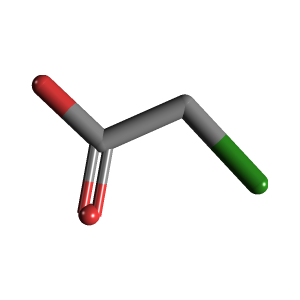
Monochloroacetic Acid Structure
1.25×
Chloroacetic acid is a chlorocarboxylic acid that is acetic acid carrying a 2-chloro substituent. It has a role as an alkylating agent and a herbicide. It is a haloacetic acid and a chlorocarboxylic acid. It is functionally related to an acetic acid. It is a conjugate acid of a chloroacetate.
3D conformer
Monochloroacetic Acid Formula
- CAS Number
- 79-11-8
- Molecular formula
- C2H3ClO2
- Molecular weight
- 94.50
- Exact mass
- 93.9821570
- IUPAC name
- 2-chloroacetic acid
- SMILES
C(C(=O)O)Cl- InChI
InChI=1S/C2H3ClO2/c3-1-2(4)5/h1H2,(H,4,5)- InChIKey
FOCAUTSVDIKZOP-UHFFFAOYSA-N
Data source: Pubchem
view
Monochloroacetic Acid Industries & Uses
Farming (Pesticides)
Monochloroacetic Acid Synonyms (140 total)
201-178-4
2-chloro-acetic acid
2-chloroacetic acid
2-chloro-ethanoic acid
5GD84Y125G
Acetic acid, 2-chloro-
Acetic acid, chloro-
Acetocaustin
Acetocaustin (TN)
Acide chloracetique
Acide chloracetique [French]
Acide chloracetique [ISO-French]
Acide chloroacetique
Acide chloroacetique [French]
Acide monochloracetique
Acide monochloracetique [French]
Acidomonocloroacetico
Acidomonocloroacetico [Italian]
AI3-25035
AKOS000118920
4-02-00-00474 (Beilstein Handbook Reference)
79-11-8
alpha-chloro-acetic acid
.alpha.-Chloroacetic acid
alpha-Chloroacetic acid
BBL037260
BIDD:ER0630
bmse000367
BRN 0605438
C06755
C2123
C2H3ClO2
CAS-79-11-8
Caswell No. 179B
CCRIS 2117
CH2ClCOOH
CHEBI:27869
CHEMBL14090
Chloracetic acid
Chloroacetic
chloro acetic acid
chloro-acetic acid
chloroacetic acid
CHLOROACETIC-ACID
Chloroacetic acid 1000 microg/mL in Methyl-tert-butyl ether
Chloroacetic acid (80% or less)
Chloroacetic acid, >=99%
Chloroacetic acid, 99%
CHLOROACETIC ACID, ACS
Chloroacetic acid, ACS grade
Chloroacetic acid, ACS reagent, >=99.0%
Chloroacetic acid, analytical standard
Chloroacetic acid [BSI:ISO]
CHLOROACETIC ACID CRYSTALLINE
Chloroacetic Acid(Discontinued,See C4X-201016)
Chloroacetic acid Flakes
Chloroacetic acid, for synthesis, 99.0%
CHLOROACETIC ACID [HSDB]
CHLOROACETIC ACID [ISO]
Chloroacetic acid, JIS special grade, >=99.0%
Chloroacetic acid, liquid
CHLOROACETIC ACID [MI]
Chloroacetic acid, molten
Chloroacetic acid, molten [UN3250] [Poison]
Chloroacetic acid, molten [UN3250] [Poison]
Chloroacetic acid, PESTANAL(R), analytical standard
Chloroacetic acid, puriss., >=99.0% (T)
Chloroacetic acid, purum, >=97.0% (T)
Chloroacetic acid, solid
Chloroacetic acid, solid (dot)
Chloroacetic acid, solid [UN1751] [Poison]
Chloroacetic acid, solid [UN1751] [Poison]
CHLOROACETIC ACID [VANDF]
Chloroethanoic acid
ClCH2COOH
cloroacetic acid
D07677
DTXCID20901
DTXSID4020901
EC 201-178-4
EINECS 201-178-4
EN300-16767
EPA Pesticide Chemical Code 279400
F095375
F2190-0289
FC37752
FOCAUTSVDIKZOP-UHFFFAOYSA-
HSDB 939
InChI=1/C2H3ClO2/c3-1-2(4)5/h1H2,(H,4,5)
Kyselina chloroctova
Kyselina chloroctova [Czech]
LMFA01090068
MCAA
MFCD00002683
MKhUK
MLS001065621
Monochloorazijnzuur
Monochloorazijnzuur [Dutch]
Monochloracetic acid
Monochloracetic acidacide monochloracetique
Monochloressigsaeure
Monochloressigsaeure [German]
monochloro acetic acid
monochloro-acetic acid
Monochloroacetic acid
Monochloroacetic acid [BSI:ISO]
MONOCHLOROACETIC ACID [MART.]
MONOCHLOROACETIC ACID [VANDF]
MONOCHLOROACETIC ACID [WHO-DD]
Monochloroethanoic acid
MSK70013
NCGC00091473-01
NCGC00091473-02
NCGC00091473-03
NCGC00258666-01
NCI-C60231
NCIOpen2_002217
NS00003112
NSC 142
NSC-142
NSC142
NSC-42970
NSC42970
Q409013
R3W
RefChem:5670
SCHEMBL19089
SCHEMBL23160
SCHEMBL3281250
sJPhLQDIKTp@
SMR000568484
STL197882
STR00326
Tox21_201114
UN1750
UN 1751
UN1751
UN3250
UNII-5GD84Y125G
WLN: QV1G
Monochloroacetic Acid Safety & hazards
Signal wordDanger
Hazard statements
- H301: Toxic if swallowed [Danger Acute toxicity, oral]
- H311: Toxic in contact with skin [Danger Acute toxicity, dermal]
- H314: Causes severe skin burns and eye damage [Danger Skin corrosion/irritation]
- H331: Toxic if inhaled [Danger Acute toxicity, inhalation]
- H400: Very toxic to aquatic life [Warning Hazardous to the aquatic environment, acute hazard]
- H301+H311+H331 (17.1%): Toxic if swallowed, in contact with skin or if inhaled [Danger Acute toxicity, oral; acute toxicity, dermal; acute toxicity, inhalation]
- H301 (> 99.9%): Toxic if swallowed [Danger Acute toxicity, oral]
- H311+H331 (33.9%): Toxic in contact with skin or if inhaled. [Danger Acute toxicity, dermal; acute toxicity, inhalation]
- H311 (99%): Toxic in contact with skin [Danger Acute toxicity, dermal]
- H314 (100%): Causes severe skin burns and eye damage [Danger Skin corrosion/irritation]
- H318 (57.9%): Causes serious eye damage [Danger Serious eye damage/eye irritation]
- H330 (42%): Fatal if inhaled [Danger Acute toxicity, inhalation]
- H331 (57.7%): Toxic if inhaled [Danger Acute toxicity, inhalation]
- H335 (58.5%): May cause respiratory irritation [Warning Specific target organ toxicity, single exposure; Respiratory tract irritation]
- H400 (100%): Very toxic to aquatic life [Warning Hazardous to the aquatic environment, acute hazard]
- H410 (19.4%): Very toxic to aquatic life with long lasting effects [Warning Hazardous to the aquatic environment, long-term hazard]
- H310: Fatal in contact with skin [Danger Acute toxicity, dermal]
- H318: Causes serious eye damage [Danger Serious eye damage/eye irritation]
- H330: Fatal if inhaled [Danger Acute toxicity, inhalation]
- H370: Causes damage to organs [Danger Specific target organ toxicity, single exposure]
- H373: May causes damage to organs through prolonged or repeated exposure [Warning Specific target organ toxicity, repeated exposure]
- H410: Very toxic to aquatic life with long lasting effects [Warning Hazardous to the aquatic environment, long-term hazard]
- H335: May cause respiratory irritation [Warning Specific target organ toxicity, single exposure; Respiratory tract irritation]
- H361: Suspected of damaging fertility or the unborn child [Warning Reproductive toxicity]
Data sourced from PubChem