beryllium chloride Chemical Formula
beryllium dichloride
beryllium chloride CAS No: 7787-47-5 beryllium chloride Molecular formula: BeCl2 PubChem CID: 24588
Hazard
Danger
beryllium chloride Chemical Manufacturers and suppliers listings
No active product listings for beryllium chloride chemical yet.
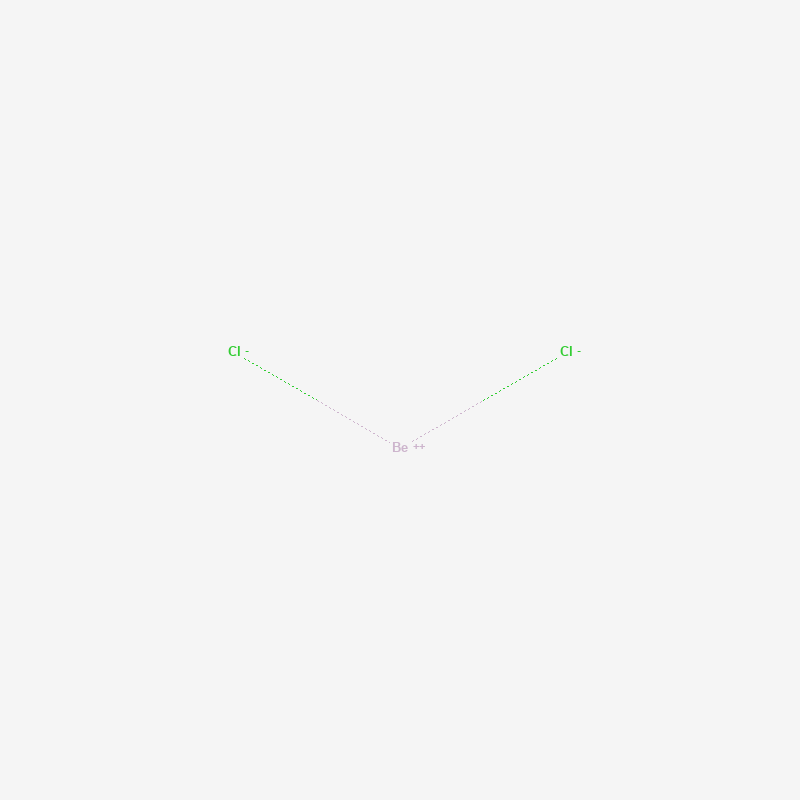
beryllium chloride Structure
1.25×
Beryllium dichloride is a compound of beryllium (+2 oxidation state) and chloride in the ratio 1:2. It has a role as a genotoxin and a carcinogenic agent. It is a beryllium molecular entity and an inorganic chloride.
beryllium chloride Formula
- CAS Number
- 7787-47-5
- Molecular formula
- BeCl2
- Molecular weight
- 79.92
- Exact mass
- 78.949888
- IUPAC name
- beryllium dichloride
- SMILES
[Be+2].[Cl-].[Cl-]- InChI
InChI=1S/Be.2ClH/h;2*1H/q+2;;/p-2- InChIKey
LWBPNIJBHRISSS-UHFFFAOYSA-L
Data source: Pubchem
view
beryllium chloride Synonyms (25 total)
232-116-4
58B7024067
7787-47-5
Berylliumchlorid
BERYLLIUM CHLORIDE
Beryllium chloride (BeCl2)
Beryllium chloride(BeCl2)
beryllium;dichloride
Beryllium dichloride
CCRIS 4490
CHEBI:62843
dichloroberyllium
DTXCID30809487
DTXSID10858756
EINECS 232-116-4
HSDB 357
NSC 84263
NSC-84263
NSC84263
RefChem:5600
BeCl2
Beryllium chloride, purified by sublimation, 99%
SCHEMBL3695807
UNII-58B7024067
WLN: BE G2
beryllium chloride Safety & hazards
Signal wordDanger
Hazard statements
- H301 (100%): Toxic if swallowed [Danger Acute toxicity, oral]
- H315 (100%): Causes skin irritation [Warning Skin corrosion/irritation]
- H317 (100%): May cause an allergic skin reaction [Warning Sensitization, Skin]
- H319 (100%): Causes serious eye irritation [Warning Serious eye damage/eye irritation]
- H330 (100%): Fatal if inhaled [Danger Acute toxicity, inhalation]
- H335 (100%): May cause respiratory irritation [Warning Specific target organ toxicity, single exposure; Respiratory tract irritation]
- H350 (97.4%): May cause cancer [Danger Carcinogenicity]
- H372 (100%): Causes damage to organs through prolonged or repeated exposure [Danger Specific target organ toxicity, repeated exposure]
- H400 (100%): Very toxic to aquatic life [Warning Hazardous to the aquatic environment, acute hazard]
- H410 (100%): Very toxic to aquatic life with long lasting effects [Warning Hazardous to the aquatic environment, long-term hazard]
- H411 (100%): Toxic to aquatic life with long lasting effects [Hazardous to the aquatic environment, long-term hazard]
- H301: Toxic if swallowed [Danger Acute toxicity, oral]
- H315: Causes skin irritation [Warning Skin corrosion/irritation]
- H317: May cause an allergic skin reaction [Warning Sensitization, Skin]
- H319: Causes serious eye irritation [Warning Serious eye damage/eye irritation]
- H330: Fatal if inhaled [Danger Acute toxicity, inhalation]
- H334: May cause allergy or asthma symptoms or breathing difficulties if inhaled [Danger Sensitization, respiratory]
- H335: May cause respiratory irritation [Warning Specific target organ toxicity, single exposure; Respiratory tract irritation]
- H372: Causes damage to organs through prolonged or repeated exposure [Danger Specific target organ toxicity, repeated exposure]
Data sourced from PubChem
