boron trifluoride Chemical Formula
trifluoroborane
boron trifluoride CAS No: 7637-07-2 boron trifluoride Molecular formula: BF3 PubChem CID: 6356
Hazard
Danger
boron trifluoride Chemical Manufacturers and suppliers listings
No active product listings for boron trifluoride chemical yet.
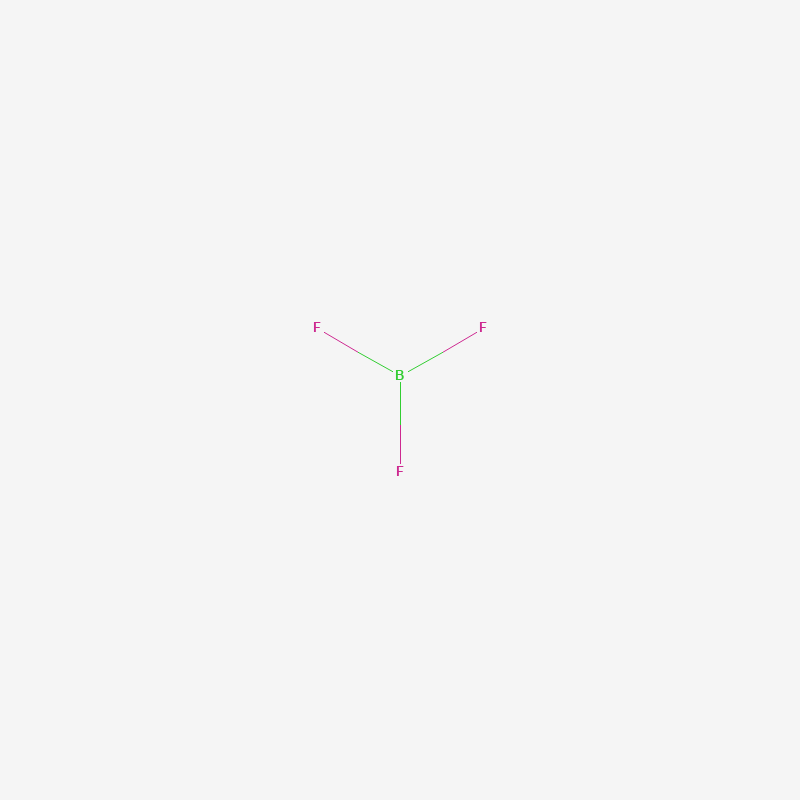
boron trifluoride Structure
1.25×
Boron trifluoride is a boron fluoride.
boron trifluoride Formula
- CAS Number
- 7637-07-2
- Molecular formula
- BF3
- Molecular weight
- 67.81
- Exact mass
- 68.0045147
- IUPAC name
- trifluoroborane
- SMILES
B(F)(F)F- InChI
InChI=1S/BF3/c2-1(3)4- InChIKey
WTEOIRVLGSZEPR-UHFFFAOYSA-N
Data source: Pubchem
view
boron trifluoride Industries & Uses
Brazing
Petroleum Production and Refining
Soldering
Semiconductor Manufacturing
Metal Extraction and Refining
boron trifluoride Synonyms (62 total)
(11B)Boron trifluoride
15875-25-9
16045-88-8
231-569-5
7637-07-2
7JGD48PX8P
AKOS015916106
Anca 1040
[BF3]
Borane-11B, trifluoro-
Borane, trifluoro-
Boron fluoride
Boron fluoride (BF3)
boron triflouride
boron-trifluoride
Borontrifluoride
BORON TRIFLUORIDE
Boron trifluoride10B
Boron trifluoride, >=99.5%
Boron trifluoride, compressed
BF3
Boron trifluoride, 14% in methanol
Boron trifluoride, compressed [UN1008] [Poison gas]
Boron trifluoride, electronic grade, >=99.99%
Boron Trifluoride Gas
Boron Trifluoride - Isopropyl Alcohol Reagent
Boron trifluoride-methanol
Boron Trifluoride - Methanol Reagent
BORON TRIFLUORIDE [MI]
Boron Trifluoride - Propanol Reagent
boron trifluride
Bortrifluorid
Brono trifluoride-methanol
CHEBI:33093
CHEMBL2220705
DTXCID5021677
DTXSID7041677
EC 231-569-5
EINECS 231-569-5
EINECS 243-946-1
Fluorure de bore
Fluorure de bore [French]
HSDB 325
InChI=1/BF3/c2-1(3)
Leecure B series (Salt/Mix)
MFCD00011316
NS00113735
Q409602
RefChem:5613
SCHEMBL780
trifluoridoboron
Trifluoro-borane
Trifluoroborane
trifluoro Boron
Trifluoroboron
UN 1008
UN1008
UNII-7JGD48PX8P
X0034
X0035
X0036
X0037
boron trifluoride Safety & hazards
Signal wordDanger
Hazard statements
- H314: Causes severe skin burns and eye damage [Danger Skin corrosion/irritation]
- H330: Fatal if inhaled [Danger Acute toxicity, inhalation]
- H280 (69.9%): Contains gas under pressure; may explode if heated [Warning Gases under pressure]
- H314 (100%): Causes severe skin burns and eye damage [Danger Skin corrosion/irritation]
- H318 (30.9%): Causes serious eye damage [Danger Serious eye damage/eye irritation]
- H330 (99.8%): Fatal if inhaled [Danger Acute toxicity, inhalation]
- H335 (30.9%): May cause respiratory irritation [Warning Specific target organ toxicity, single exposure; Respiratory tract irritation]
- H373 (31.4%): May causes damage to organs through prolonged or repeated exposure [Warning Specific target organ toxicity, repeated exposure]
- H280: Contains gas under pressure; may explode if heated [Warning Gases under pressure]
- H318: Causes serious eye damage [Danger Serious eye damage/eye irritation]
- H371: May cause damage to organs [Warning Specific target organ toxicity, single exposure]
- H372: Causes damage to organs through prolonged or repeated exposure [Danger Specific target organ toxicity, repeated exposure]
- H336: May cause drowsiness or dizziness [Warning Specific target organ toxicity, single exposure; Narcotic effects]
- H373: May causes damage to organs through prolonged or repeated exposure [Warning Specific target organ toxicity, repeated exposure]
Data sourced from PubChem