caesium chromate Chemical Formula
dicesium;dioxido(dioxo)chromium
caesium chromate CAS No: 13454-78-9 caesium chromate Molecular formula: CrCs2O4 PubChem CID: 61613
Hazard
Danger
caesium chromate Chemical Manufacturers and suppliers listings
No active product listings for caesium chromate chemical yet.
caesium chromate Structure
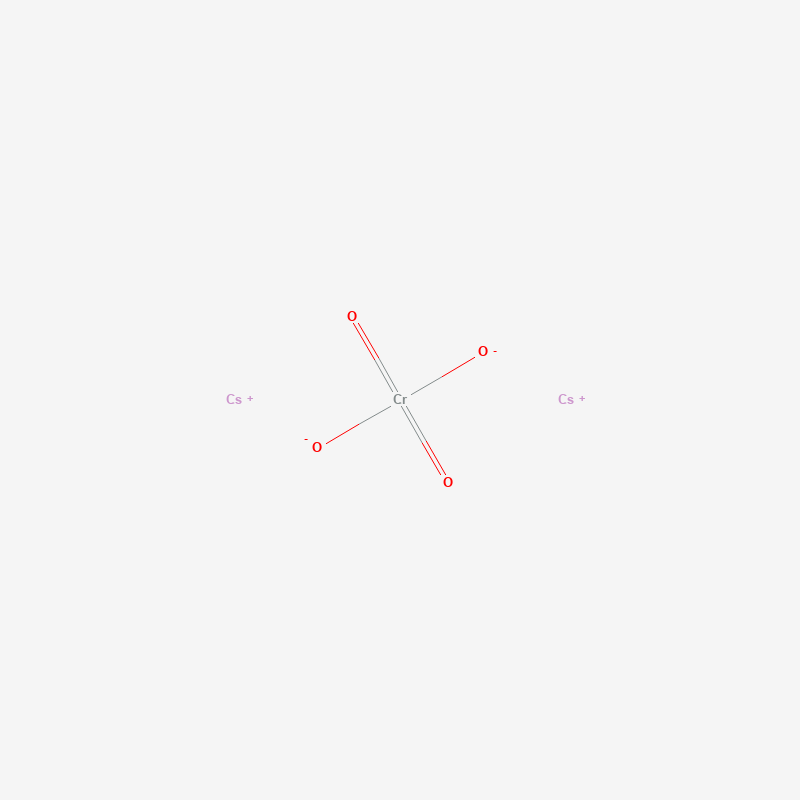
1.25×
caesium chromate Formula
- CAS Number
- 13454-78-9
- Molecular formula
- CrCs2O4
- Molecular weight
- 381.805
- Exact mass
- 381.731067
- IUPAC name
- dicesium;dioxido(dioxo)chromium
- SMILES
[O-][Cr](=O)(=O)[O-].[Cs+].[Cs+]- InChI
InChI=1S/Cr.2Cs.4O/q;2*+1;;;2*-1- InChIKey
BROHICCPQMHYFY-UHFFFAOYSA-N
Data source: Pubchem
view
caesium chromate Synonyms (22 total)
13454-78-9
56320-90-2
Cesium chromate
CESIUM CHROMATE 99.9+%
Cesium chromate (Cs2CrO4)
Chromic acid cesium salt
Cs2CrO4
DB-254210
Dicesium chromate
DTXCID201324461
DTXSID20894903
EINECS 236-640-4
MFCD00016050
Q416962
RefChem:124636
SCHEMBL406339
Chromic acid (H2CrO4), cesium salt (1:2)
Chromic acid (H2CrO4), dicesium salt
Dicaesium tetrakis(oxido)chromate(2-)
dicesium;dioxido(dioxo)chromium
small es, Cyrillicaesium chromate
small es, Cyrillichromic acid cesium salt
caesium chromate Safety & hazards
Signal wordDanger
Hazard statements
- H272 (94.4%): May intensify fire; oxidizer [Danger Oxidizing liquids; Oxidizing solids]
- H315 (36.1%): Causes skin irritation [Warning Skin corrosion/irritation]
- H317 (100%): May cause an allergic skin reaction [Warning Sensitization, Skin]
- H319 (36.1%): Causes serious eye irritation [Warning Serious eye damage/eye irritation]
- H335 (36.1%): May cause respiratory irritation [Warning Specific target organ toxicity, single exposure; Respiratory tract irritation]
- H340 (36.1%): May cause genetic defects [Danger Germ cell mutagenicity]
- H350 (100%): May cause cancer [Danger Carcinogenicity]
- H400 (58.3%): Very toxic to aquatic life [Warning Hazardous to the aquatic environment, acute hazard]
- H410 (100%): Very toxic to aquatic life with long lasting effects [Warning Hazardous to the aquatic environment, long-term hazard]
- H272 (88.4%): May intensify fire; oxidizer [Danger Oxidizing liquids; Oxidizing solids]
- H315 (90.7%): Causes skin irritation [Warning Skin corrosion/irritation]
- H317 (11.6%): May cause an allergic skin reaction [Warning Sensitization, Skin]
- H319 (90.7%): Causes serious eye irritation [Warning Serious eye damage/eye irritation]
- H335 (90.7%): May cause respiratory irritation [Warning Specific target organ toxicity, single exposure; Respiratory tract irritation]
- H350 (97.7%): May cause cancer [Danger Carcinogenicity]
- H400 (11.6%): Very toxic to aquatic life [Warning Hazardous to the aquatic environment, acute hazard]
- H410 (11.6%): Very toxic to aquatic life with long lasting effects [Warning Hazardous to the aquatic environment, long-term hazard]
Data sourced from PubChem
