calcium chromate Chemical Formula
calcium oxido-(oxido(dioxo)chromio)oxy-dioxochromium
calcium chromate CAS No: 14307-33-6 calcium chromate Molecular formula: CaCr2O7 PubChem CID: 61731
Hazard
Danger
calcium chromate Chemical Manufacturers and suppliers listings
No active product listings for calcium chromate chemical yet.
calcium chromate Structure
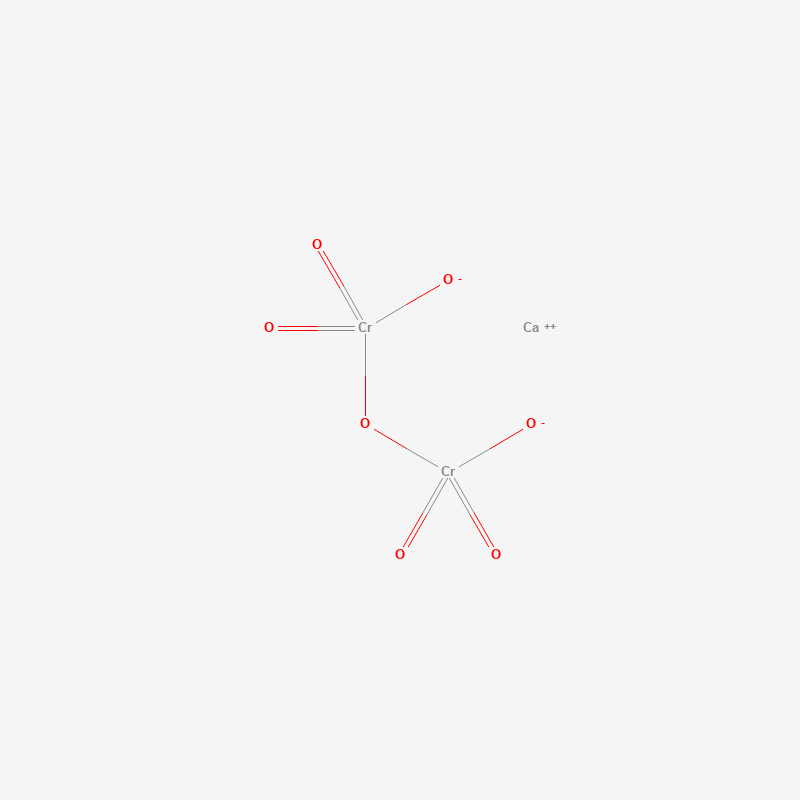
1.25×
calcium chromate Formula
- CAS Number
- 14307-33-6
- Molecular formula
- CaCr2O7
- Molecular weight
- 256.07
- Exact mass
- 255.808003
- IUPAC name
- calcium oxido-(oxido(dioxo)chromio)oxy-dioxochromium
- SMILES
[O-][Cr](=O)(=O)O[Cr](=O)(=O)[O-].[Ca+2]- InChI
InChI=1S/Ca.2Cr.7O/q+2;;;;;;;;2*-1- InChIKey
RMISVBXFFXBNAD-UHFFFAOYSA-N
Data source: Pubchem
view
calcium chromate Synonyms (20 total)
14307-33-6
14307-49-4
238-243-1
Calcium bichromate
Calcium dichromate
Calcium dichromate(VI)
CALCIUM DICHROMATE(VI) [MI]
DTXCID7030274
DTXSID7051719
EINECS 238-243-1
EXJ6T6P0L9
Q16644632
RefChem:1080680
SCHEMBL643583
UNII-EXJ6T6P0L9
Calcium mu-oxidohexakis(oxido)dichromate(2-)
calcium;oxido-(oxido(dioxo)chromio)oxy-dioxochromium
Chromic acid (H2Cr2O7), calcium salt (1:1)
Dichromic acid, calcium salt (1:1)
DICHROMIC(VI) ACID, CALCIUM SALT (1:1)
calcium chromate Safety & hazards
Signal wordDanger
Hazard statements
- H302 (97.8%): Harmful if swallowed [Warning Acute toxicity, oral]
- H317 (100%): May cause an allergic skin reaction [Warning Sensitization, Skin]
- H350 (100%): May cause cancer [Danger Carcinogenicity]
- H410 (100%): Very toxic to aquatic life with long lasting effects [Warning Hazardous to the aquatic environment, long-term hazard]
- H301: Toxic if swallowed [Danger Acute toxicity, oral]
- H312: Harmful in contact with skin [Warning Acute toxicity, dermal]
- H314: Causes severe skin burns and eye damage [Danger Skin corrosion/irritation]
- H317: May cause an allergic skin reaction [Warning Sensitization, Skin]
- H330: Fatal if inhaled [Danger Acute toxicity, inhalation]
- H334: May cause allergy or asthma symptoms or breathing difficulties if inhaled [Danger Sensitization, respiratory]
- H340: May cause genetic defects [Danger Germ cell mutagenicity]
- H350: May cause cancer [Danger Carcinogenicity]
- H360: May damage fertility or the unborn child [Danger Reproductive toxicity]
- H372: Causes damage to organs through prolonged or repeated exposure [Danger Specific target organ toxicity, repeated exposure]
- H410: Very toxic to aquatic life with long lasting effects [Warning Hazardous to the aquatic environment, long-term hazard]
Data sourced from PubChem