chlorine dioxide Chemical Formula
chlorine dioxide CAS No: 10049-04-4 chlorine dioxide Molecular formula: ClO2 PubChem CID: 24870
Hazard
Danger
chlorine dioxide Chemical Manufacturers and suppliers listings
No active product listings for chlorine dioxide chemical yet.
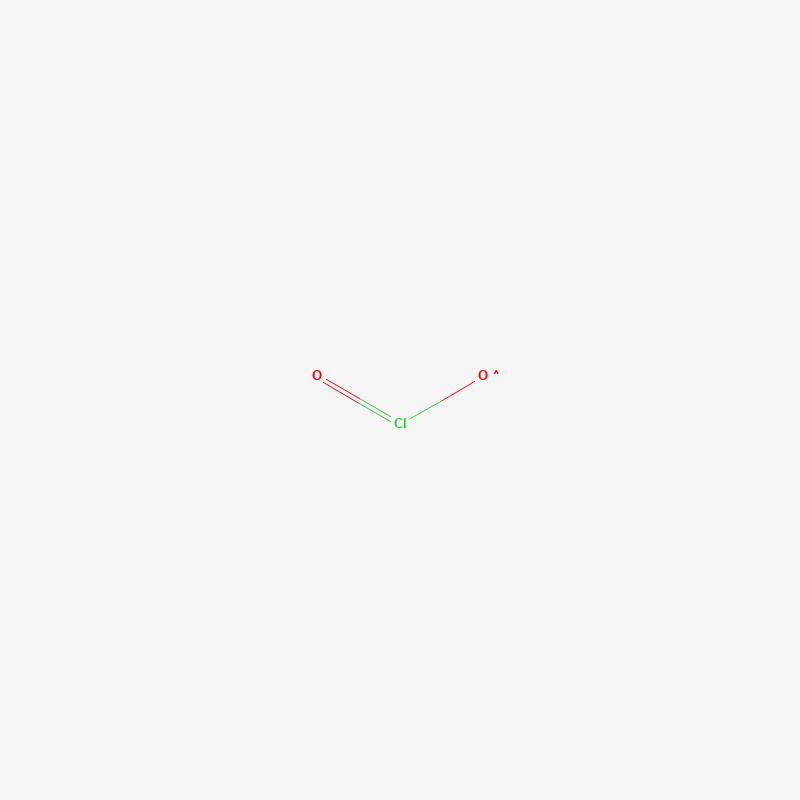
chlorine dioxide Structure
1.25×
Dioxidochlorine(.) is a chlorine dioxide.
chlorine dioxide Formula
- CAS Number
- 10049-04-4
- Molecular formula
- ClO2
- Molecular weight
- 67.45
- Exact mass
- 66.9586819
- SMILES
O=Cl[O]- InChI
InChI=1S/ClO2/c2-1-3- InChIKey
OSVXSBDYLRYLIG-UHFFFAOYSA-N
Data source: Pubchem
view
chlorine dioxide Industries & Uses
Pulp and Paper Processing
Textiles (Fiber & Fabric Manufacturing)
Using Disinfectants or Biocides
Sewer and Wastewater Treatment
Toxic Gas from Spilling Chemical in Water
chlorine dioxide Synonyms (53 total)
10049-04-4
233-162-8
8061YMS4RM
Alcide
Anthium dioxcide
BlueMAX Premium EU
BlueMAX Pre-Post
CHEBI:29415
CHEBI:37750
CHEBI:52357
CHLORINE DIOXIDE
Chlorine Dioxide(ClO2)
Chlorine(IV) oxide
Chlorine oxide?
Chlorine Oxide
Chlorine oxide (ClO2)
Chloroperoxyl
Chloryl radical
[ClO2](.)
ClO2
chlorine dioxide air disinfectant
Chlorine dioxide disinfectant
Chlorine Dioxide Sustained Release Granules
DB12453
dioxidochlorine(.)
dioxido-lambda(5)-chloranyl
Dioxo-lambda~5~-chloranyl
DMINE PENTOSE MEDI PLUS
Doxcide 50
DTXCID803958
DTXSID5023958
E926
Gladiator Super Dry
Jiajia Gaseous Air Disinfectant
Joyden
Joyden plus
KO-C100
M.C. (Morningcalm) V Zero
Nobda disinfectant
O2Cl(.)
(OClO)(.)
ProVtect Hand Sanitizer
PURE O2 S
PURE O2-S F
Purite
RefChem:5668
SANI-HEALTH Sanitizer
SFP INC. NVO-2 TOPICAL NAVEL DIP
SFP INC. VO-2 SANITIZING TEAT DIP
SKIN N CLEAN
TBOSEN EMERGENCY STERILIZATION CARD
VIRUS KILL SANITIZER
VIRUS ZERO-F
chlorine dioxide Safety & hazards
Signal wordDanger
Hazard statements
- H270: May cause or intensify fire; oxidizer [Danger Oxidizing gases]
- H314: Causes severe skin burns and eye damage [Danger Skin corrosion/irritation]
- H330: Fatal if inhaled [Danger Acute toxicity, inhalation]
- H400: Very toxic to aquatic life [Warning Hazardous to the aquatic environment, acute hazard]
- H301: Toxic if swallowed [Danger Acute toxicity, oral]
- H270 (29.9%): May cause or intensify fire; oxidizer [Danger Oxidizing gases]
- H280 (29.2%): Contains gas under pressure; may explode if heated [Warning Gases under pressure]
- H301 (72.1%): Toxic if swallowed [Danger Acute toxicity, oral]
- H314 (76.2%): Causes severe skin burns and eye damage [Danger Skin corrosion/irritation]
- H318 (46.3%): Causes serious eye damage [Danger Serious eye damage/eye irritation]
- H319 (24%): Causes serious eye irritation [Warning Serious eye damage/eye irritation]
- H330 (29.9%): Fatal if inhaled [Danger Acute toxicity, inhalation]
- H332 (15.9%): Harmful if inhaled [Warning Acute toxicity, inhalation]
- H400 (76.2%): Very toxic to aquatic life [Warning Hazardous to the aquatic environment, acute hazard]
- H320: Causes eye irritation [Warning Serious eye damage/eye irritation]
- H336: May cause drowsiness or dizziness [Warning Specific target organ toxicity, single exposure; Narcotic effects]
- H360: May damage fertility or the unborn child [Danger Reproductive toxicity]
- H362: May cause harm to breast-fed children [Reproductive toxicity, effects on or via lactation]
- H370: Causes damage to organs [Danger Specific target organ toxicity, single exposure]
- H372: Causes damage to organs through prolonged or repeated exposure [Danger Specific target organ toxicity, repeated exposure]
- H410: Very toxic to aquatic life with long lasting effects [Warning Hazardous to the aquatic environment, long-term hazard]
- H315: Causes skin irritation [Warning Skin corrosion/irritation]
- H319: Causes serious eye irritation [Warning Serious eye damage/eye irritation]
- H341: Suspected of causing genetic defects [Warning Germ cell mutagenicity]
Data sourced from PubChem
