Hazard
Danger
chloroform Supplier & product listings
No active product listings for this chemical yet.
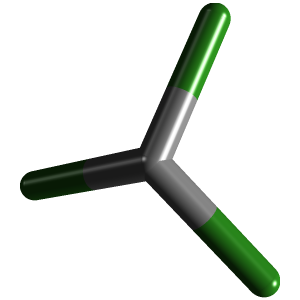
1.75×
Chloroform can cause cancer and developmental toxicity according to an independent committee of scientific and health experts.
3D conformer
chloroform Formula
- CAS Number
- 67-66-3
- Molecular formula
- CHCl3
- Molecular weight
- 119.37
- Exact mass
- 117.914383
- IUPAC name
- chloroform
- SMILES
C(Cl)(Cl)Cl- InChI
InChI=1S/CHCl3/c2-1(3)4/h1H- InChIKey
HEDRZPFGACZZDS-UHFFFAOYSA-N
Data source: Pubchem
view
chloroform Industries & Uses
Dry Cleaning
Plastic Composites Manufacturing
Smoking cigarettes
chloroform Synonyms (171 total)
1,1,1-Trichloromethane
200-663-8
300037X
300040X
67-66-3
7V31YC746X
AAA86549
AI3-24207
AKOS000269026
BRD-K88785477-001-01-8
BRN 1731042
C0819
CAS-67-66-3
Caswell No. 192
CCl3H
CCRIS 137
CHCl3
CHEBI:35255
CHEMBL44618
chlorform
4-01-00-00042 (Beilstein Handbook Reference)
CHLOROBUTANOL IMPURITY A [EP IMPURITY]
chloro form
chloro-form
Chloroform-
CHLOROFORM
Chloroform 100 microg/mL in Methanol
Chloroform 5000 microg/mL in Methanol
Chloroform, 99.8%, ACS Reagent stabilized with Ethanol
Chloroform, >=99%, PCR Reagent, contains amylenes as stabilizer
CHLOROFORM, ACS
Chloroform, ACS reagent, >=99.8%, contains 0.5-1.0% ethanol as stabilizer
Chloroform, ACS reagent, >=99.8%, contains amylenes as stabilizer
Chloroform, ACS reagent, Reag. Ph. Eur., contains ethanol as stabilizer
Chloroform, ACS spectrophotometric grade, >=99.8%, contains 0.5-1.0% ethanol as stabilizer
Chloroform, ACS spectrophotometric grade, >=99.8%, contains amylenes as stabilizer
Chloroform, analytical standard
Chloroform, anhydrous, >=99%, contains 0.5-1.0% ethanol as stabilizer
Chloroform (Anhydrous) Contains Amylenes as stabilizer
Chloroform, anhydrous, contains amylenes as stabilizer, >=99%
Chloroform, AR, contains 100 ppm amylene as stabilizer, >=99.5%
Chloroform, AR, contains 1-2% ethanol as stabilizer, >=99.5%
Chloroform, biotech. grade, >=99.8%, contains 0.5-1.0% ethanol as stabilizer
Chloroform bp
chloroform CHCl3
Chloroform, contains 100-200 ppm amylenes as stabilizer, >=99.5%
Chloroform, contains amylenes as stabilizer, ACS reagent, >=99.8%
Chloroform, contains ethanol as stabilizer, ACS reagent, >=99.8%
Chloroform, contains ethanol as stabilizer, meets analytical specification of DAB9, BP, 99-99.4% (GC)
Chloroforme
Chloroforme [French]
Chloroform, ethanol-free
Chloroform, for HPLC
Chloroform, for HPLC, >=99.5%
Chloroform, for HPLC, >=99.8%, amylene stabilized
Chloroform, for HPLC, >=99.8% (chloroform + ethanol, GC)
Chloroform, for HPLC, >=99.8%, contains 0.5-1.0% ethanol as stabilizer
CHLOROFORM [GREEN BOOK]
Chloroform, HPLC Grade
Chloroform, HPLC grade stabilized with ethanol
CHLOROFORM [HSDB]
CHLOROFORM [IARC]
CHLOROFORM [II]
chloroformium pro narcosi
Chloroform, JIS special grade, >=99.0%
Chloroform, LR, contains 100 ppm amylene as stabilizer, >=99%
CHLOROFORM [MART.]
CHLOROFORM [MI]
Chloroform [NF]
Chloroform [NF XVII]
Chloroform, p.a., 99.8%
Chloroform, p.a., ACS reagent, 99.8%, contains 0.005% Amylene
Chloroform, p.a., ACS reagent, reag. ISO, 99.8%, contains 50 ppm Amylene
Chloroform, Pharmaceutical Secondary Standard; Certified Reference Material
Chloroform, purification grade, >=99%
Chloroform, puriss. p.a., ACS reagent, >=99.8% (chloroform + ethanol, GC)
Chloroform, puriss. p.a., reag. ISO, reag. Ph. Eur., 99.0-99.4% (GC)
Chloroform, ReagentPlus(R), >=99.8%, contains 0.5-1.0% ethanol as stabilizer
Chloroform, SAJ first grade, >=99.0%, contains 0.4-0.8% ethanol
Chloroform, SAJ super special grade, >=99.0%
Chloroform, Spectrophotometric Grade
Chloroform, stabilised with Amylene, >99.9%
Chloroform (Stabilized with ~1% Ethanol)
Chloroform (stabilized with 2-Methyl-2-butene)
Chloroform stabilized with 50-200 ppm Amylene ACS Reagent Grade
Chloroform (stabilized with ethanol)
Chloroform, technical, amylene stabilized, >=99% (GC)
Chloroform, technical grade, 95%, contains 50 ppm Amylene
Chloroformum
CHLOROFORMUM [HPUS]
Chloroform [UN1888] [Poison]
CHLOROFORM [USP-RS]
Chloroform, UV HPLC spectroscopic, 99.0%, contains 0.6-1.0% Ethanol
Chloroform, UV HPLC spectroscopic, 99.9%, contains 50 ppm Amylene
CHLOROFORM [VANDF]
CHLOROFORM [WHO-DD]
CHLOROFORMWith Amylene
Chloroform with Amylene HPLC grade
CHLOROFORMWith Ethanol
chloroforrn
cloroform
Cloroformio
Cloroformio [Italian]
DB11387
DTXCID10306
DTXSID1020306
EC 200-663-8
EINECS 200-663-8
EPA Pesticide Chemical Code 020701
F0001-1775
F 20
F600013
Formyl trichloride
Freon 20
GTPL2503
Hcc 20
HCCl3
HSDB 56
InChI=1/CHCl3/c2-1(3)4/h1
L023971
methane trichloride
Methane trichloride
Methane, trichloro-
Methenyl chloride
Methenyl trichloride
Methylidyne trichloride
Methyl trichloride
MFCD00000826
NCGC00090794-01
NCGC00090794-02
NCGC00260043-01
NCI-C02686
NS00007346
NSC 77361
NSC-77361
NSC77361
Q172275
R 20
R 20 (Refrigerant)
R 20 (VAN)
RCRA waste no. U044
RCRA waste number U044
RefChem:6629
Refrigerant R20
Residual Solvent - Chloroform, Pharmaceutical Secondary Standard; Certified Reference Material
Residual Solvent Class 2 - Chloroform, United States Pharmacopeia (USP) Reference Standard
SCHEMBL5056
SCHEMBL88
Tox21_111024
Tox21_202494
Trichloormethaan
Trichloormethaan [Dutch]
Trichlormethan
Trichlormethan/Chloroform
Trichlormethan [Czech]
trichlormethane
Trichloro(2H)methane
Trichloroform
trichloro- methane
trichloro-methane
Trichloromethane
Trichloromethane 100 microg/mL in Methanol
Trichloromethane 10 microg/mL in Methanol
Trichloromethane 5000 microg/mL in Methanol
Trichloromethane, 9CI
Triclorometano
Triclorometano [Italian]
UN 1888
UN1888
UNII-7V31YC746X
WLN: GYGG
chloroform Safety & hazards
Signal wordDanger
Hazard statements
- H302: Harmful if swallowed [Warning Acute toxicity, oral]
- H315: Causes skin irritation [Warning Skin corrosion/irritation]
- H319: Causes serious eye irritation [Warning Serious eye damage/eye irritation]
- H331: Toxic if inhaled [Danger Acute toxicity, inhalation]
- H351: Suspected of causing cancer [Warning Carcinogenicity]
- H372: Causes damage to organs through prolonged or repeated exposure [Danger Specific target organ toxicity, repeated exposure]
- H302 (94.8%): Harmful if swallowed [Warning Acute toxicity, oral]
- H315 (> 99.9%): Causes skin irritation [Warning Skin corrosion/irritation]
- H319 (64.3%): Causes serious eye irritation [Warning Serious eye damage/eye irritation]
- H331 (60.7%): Toxic if inhaled [Danger Acute toxicity, inhalation]
- H336 (16.3%): May cause drowsiness or dizziness [Warning Specific target organ toxicity, single exposure; Narcotic effects]
- H351 (> 99.9%): Suspected of causing cancer [Warning Carcinogenicity]
- H361 (54.8%): Suspected of damaging fertility or the unborn child [Warning Reproductive toxicity]
- H372 (63.8%): Causes damage to organs through prolonged or repeated exposure [Danger Specific target organ toxicity, repeated exposure]
- H373 (69.5%): May causes damage to organs through prolonged or repeated exposure [Warning Specific target organ toxicity, repeated exposure]
- H318: Causes serious eye damage [Danger Serious eye damage/eye irritation]
- H332: Harmful if inhaled [Warning Acute toxicity, inhalation]
- H336: May cause drowsiness or dizziness [Warning Specific target organ toxicity, single exposure; Narcotic effects]
- H341: Suspected of causing genetic defects [Warning Germ cell mutagenicity]
- H361: Suspected of damaging fertility or the unborn child [Warning Reproductive toxicity]
- H370: Causes damage to organs [Danger Specific target organ toxicity, single exposure]
- H402: Harmful to aquatic life [Hazardous to the aquatic environment, acute hazard]
- H410: Very toxic to aquatic life with long lasting effects [Warning Hazardous to the aquatic environment, long-term hazard]
- H314: Causes severe skin burns and eye damage [Danger Skin corrosion/irritation]
- H373: May causes damage to organs through prolonged or repeated exposure [Warning Specific target organ toxicity, repeated exposure]
Data sourced from PubChem