copper(II) chloride Chemical Formula
dichlorocopper
copper(II) chloride CAS No: 7447-39-4 copper(II) chloride Molecular formula: Cl2Cu PubChem CID: 24014
Hazard
Danger
copper(II) chloride Chemical Manufacturers and suppliers listings
No active product listings for copper(II) chloride chemical yet.
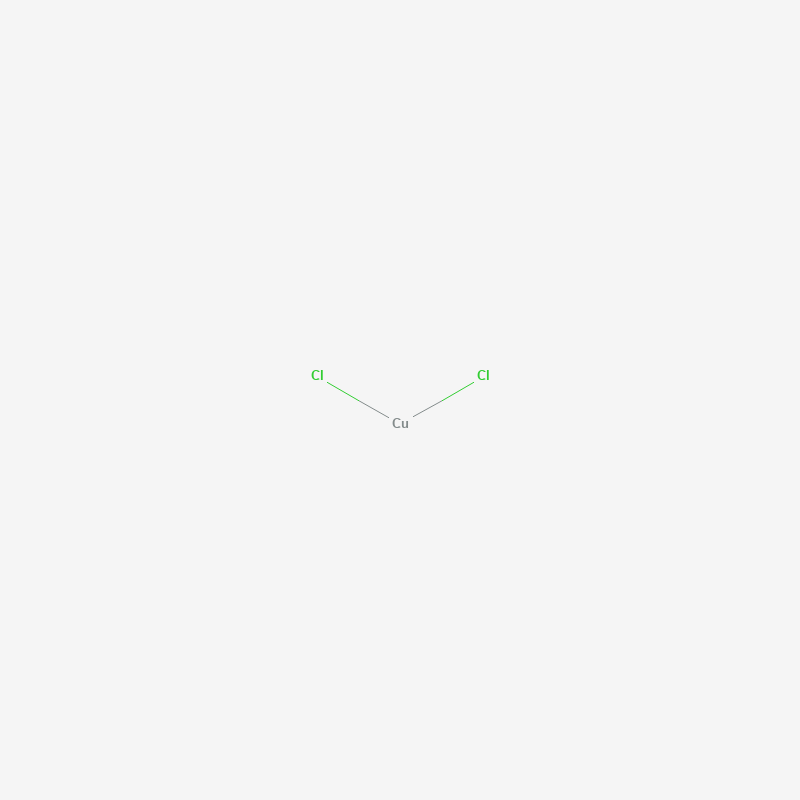
copper(II) chloride Structure
1.25×
Copper(II) chloride is an inorganic chloride of copper in which the metal is in the +2 oxidation state. It has a role as an EC 5.3.3.5 (cholestenol Delta-isomerase) inhibitor. It is a copper molecular entity and an inorganic chloride. It contains a copper(2+).
copper(II) chloride Formula
- CAS Number
- 7447-39-4
- Molecular formula
- Cl2Cu
- Molecular weight
- 134.45
- Exact mass
- 132.867303
- IUPAC name
- dichlorocopper
- SMILES
Cl[Cu]Cl- InChI
InChI=1S/2ClH.Cu/h2*1H;/q;;+2/p-2- InChIKey
ORTQZVOHEJQUHG-UHFFFAOYSA-L
Data source: Pubchem
view
copper(II) chloride Industries & Uses
Aluminum Producing
Electroplating
Petroleum Production and Refining
Smelting Copper or Lead
Applying Wood Preservatives
Using Disinfectants or Biocides
Photographic Processing
Textiles (Printing, Dyeing, or Finishing)
Glass Manufacturing
Farming (Feed Additives)
Ceramics making
Glassblowing
Applying metallic patinas
copper(II) chloride Synonyms (63 total)
231-210-2
7447-39-4
AI3-01658
AKOS015902778
BP-13443
CCRIS 6883
CHEBI:49553
Copper(2+) chloride
Copper(2+)chloride
Copper (as cupric chloride)
Copper bichloride
Copper chloride
Copper chloride (CuCl2)
Copper chloride (VAN)
Copper dichloride
copper (II)-chloride
copper (II)chloride
copper(II)-chloride
Copper(II) chloride
Copper(II)chloride
Coclor
Copper chloride (cucl2) dihydrate
Copper(II) chloride (1:2)
Copper (II) chloride, 95%
Copper(II) chloride, 97%
Copper(II) chloride, 99.999% trace metals basis
Copper (II) chloride anhydrous
Copper(II) chloride, anhydrous
Copper(II) chloride, anhydrous, powder, >=99.995% trace metals basis
Copper(II) chloride, LR, >=98%
Copper(II) chloride, p.a., 97%
Copper(II) chloride, powder, 99%
Copper(II) chloride, SAJ first grade, >=98.0%
Copper (II) Chloride, Trace metals grade
Copper(II) chloride, ultra dry
Copper (II) chloride, ultra dry, powder, ampoule, 99.995% trace metals grade
copper (II) cloride
CuCl2
CUPRIC CHLORIDE
Cupric chloride anhydrous
Cupric chloride in plastic container
Cupric dichloride
Cuprum Muriaticum
DB09131
dichlorocopper
DTXCID5020449
DTXSID7040449
EC 231-210-2
EINECS 231-210-2
Epitope ID:156811
FC34323
HSDB 259
Kirticopper
NCI60_001274
NSC 165706
NSC-165706
NSC165706
P484053J2Y
Q421781
RefChem:5712
S2QG84156O
SCHEMBL29279
UNII-P484053J2Y
copper(II) chloride Safety & hazards
Signal wordDanger
Hazard statements
- H290 (10.4%): May be corrosive to metals [Warning Corrosive to Metals]
- H302+H312 (26.9%): Harmful if swallowed or in contact with skin [Warning Acute toxicity, oral; acute toxicity, dermal]
- H302 (94.4%): Harmful if swallowed [Warning Acute toxicity, oral]
- H312 (84.7%): Harmful in contact with skin [Warning Acute toxicity, dermal]
- H315 (98%): Causes skin irritation [Warning Skin corrosion/irritation]
- H318 (85.6%): Causes serious eye damage [Danger Serious eye damage/eye irritation]
- H319 (12.4%): Causes serious eye irritation [Warning Serious eye damage/eye irritation]
- H400 (92%): Very toxic to aquatic life [Warning Hazardous to the aquatic environment, acute hazard]
- H410 (55.3%): Very toxic to aquatic life with long lasting effects [Warning Hazardous to the aquatic environment, long-term hazard]
- H411 (62.5%): Toxic to aquatic life with long lasting effects [Hazardous to the aquatic environment, long-term hazard]
- H301 (86.2%): Toxic if swallowed [Danger Acute toxicity, oral]
- H315 (89.7%): Causes skin irritation [Warning Skin corrosion/irritation]
- H319 (89.7%): Causes serious eye irritation [Warning Serious eye damage/eye irritation]
- H335 (89.7%): May cause respiratory irritation [Warning Specific target organ toxicity, single exposure; Respiratory tract irritation]
- H400 (10.3%): Very toxic to aquatic life [Warning Hazardous to the aquatic environment, acute hazard]
- H410 (10.3%): Very toxic to aquatic life with long lasting effects [Warning Hazardous to the aquatic environment, long-term hazard]
- H301: Toxic if swallowed [Danger Acute toxicity, oral]
- H315: Causes skin irritation [Warning Skin corrosion/irritation]
- H317: May cause an allergic skin reaction [Warning Sensitization, Skin]
- H319: Causes serious eye irritation [Warning Serious eye damage/eye irritation]
- H361: Suspected of damaging fertility or the unborn child [Warning Reproductive toxicity]
Data sourced from PubChem