lead(II) fluoride Chemical Formula
difluorolead
lead(II) fluoride CAS No: 7783-46-2 lead(II) fluoride Molecular formula: F2Pb PubChem CID: 24549
Hazard
Danger
lead(II) fluoride Chemical Manufacturers and suppliers listings
No active product listings for lead(II) fluoride chemical yet.
lead(II) fluoride Structure
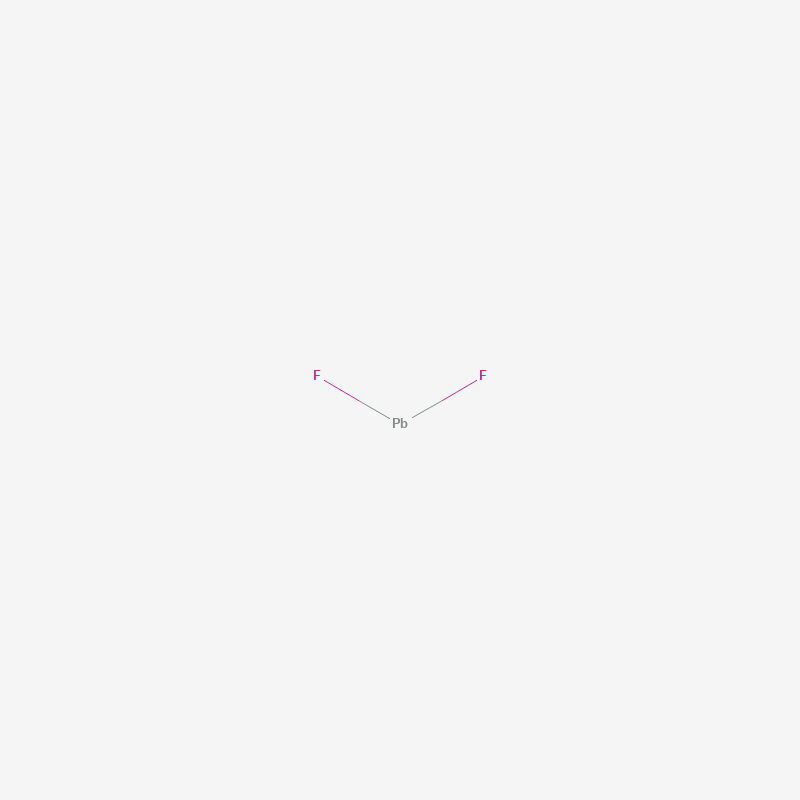
1.25×
lead(II) fluoride Formula
- CAS Number
- 7783-46-2
- Molecular formula
- F2Pb
- Molecular weight
- 245
- Exact mass
- 245.97346
- IUPAC name
- difluorolead
- SMILES
F[Pb]F- InChI
InChI=1S/2FH.Pb/h2*1H;/q;;+2/p-2- InChIKey
FPHIOHCCQGUGKU-UHFFFAOYSA-L
Data source: Pubchem
view
lead(II) fluoride Industries & Uses
Glass Manufacturing
lead(II) fluoride Synonyms (25 total)
231-998-8
291824BBS4
7783-46-2
AKOS015902450
difluorolead
difluoroplumbane
DTXCID701326393
DTXSID60896961
DTXSID901014471
lead(2+) difluoride
Lead(+2) fluoride
LEAD(2+) FLUORIDE
Lead difluoride
Lead fluoride
LEAD FLUORIDE (PbF2)
Lead(II) fluoride
Plomb fluorure
Plumbous fluoride
Q419690
RefChem:798736
Lead(II) fluoride, 99.99% trace metals basis
Lead(II) fluoride, powder, >=99%
Lead(II) fluoride, Puratronic?
PbF2
SCHEMBL154978
lead(II) fluoride Safety & hazards
Signal wordDanger
Hazard statements
- H302 (100%): Harmful if swallowed [Warning Acute toxicity, oral]
- H332 (100%): Harmful if inhaled [Warning Acute toxicity, inhalation]
- H360 (98.8%): May damage fertility or the unborn child [Danger Reproductive toxicity]
- H373 (98.8%): May causes damage to organs through prolonged or repeated exposure [Warning Specific target organ toxicity, repeated exposure]
- H400 (100%): Very toxic to aquatic life [Warning Hazardous to the aquatic environment, acute hazard]
- H410 (100%): Very toxic to aquatic life with long lasting effects [Warning Hazardous to the aquatic environment, long-term hazard]
- H303: May be harmful if swallowed [Warning Acute toxicity, oral]
- H316: Causes mild skin irritation [Warning Skin corrosion/irritation]
- H319: Causes serious eye irritation [Warning Serious eye damage/eye irritation]
- H335: May cause respiratory irritation [Warning Specific target organ toxicity, single exposure; Respiratory tract irritation]
- H350: May cause cancer [Danger Carcinogenicity]
- H360: May damage fertility or the unborn child [Danger Reproductive toxicity]
- H370: Causes damage to organs [Danger Specific target organ toxicity, single exposure]
- H372: Causes damage to organs through prolonged or repeated exposure [Danger Specific target organ toxicity, repeated exposure]
- H302: Harmful if swallowed [Warning Acute toxicity, oral]
- H332: Harmful if inhaled [Warning Acute toxicity, inhalation]
- H341: Suspected of causing genetic defects [Warning Germ cell mutagenicity]
- H351: Suspected of causing cancer [Warning Carcinogenicity]
Data sourced from PubChem
