lithium hydroxide Chemical Formula
lithium hydroxide
lithium hydroxide CAS No: 1310-65-2 lithium hydroxide Molecular formula: HLiO PubChem CID: 3939
Hazard
Danger
lithium hydroxide Chemical Manufacturers and suppliers listings
No active product listings for lithium hydroxide chemical yet.
lithium hydroxide Structure
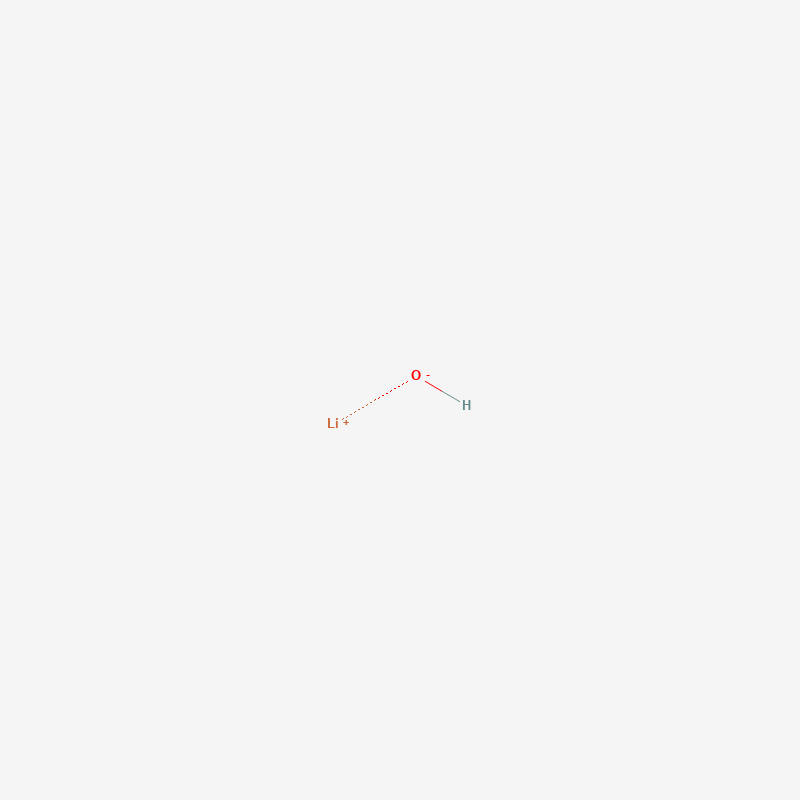
1.25×
Lithium hydroxide is an alkali metal hydroxide.
lithium hydroxide Formula
- CAS Number
- 1310-65-2
- Molecular formula
- HLiO
- Molecular weight
- 24.0
- Exact mass
- 24.01874309
- IUPAC name
- lithium hydroxide
- SMILES
[Li+].[OH-]- InChI
InChI=1S/Li.H2O/h;1H2/q+1;/p-1- InChIKey
WMFOQBRAJBCJND-UHFFFAOYSA-M
Data source: Pubchem
view
lithium hydroxide Industries & Uses
Welding
Electroplating
Battery Manufacturing
Painting (Pigments, Binders, and Biocides)
Gas Welding and Cutting
Photographic Processing
Textiles (Printing, Dyeing, or Finishing)
lithium hydroxide Synonyms (52 total)
1310-65-2
215-183-4
64538-53-0
903YL31JAS
AKOS015904130
AKOS025264482
AKOS037479138
CHEBI:33979
DB14506
DTXCID801323885
DTXSID70893845
DTXSID901337186
EC 215-183-4
EINECS 215-183-4
G51XLP968G
L0225
lithium hydorxide
Lithium hydoxide
Lithium hydrate
lithium hydroxid
HLiO
LiOH
Lithiumhydroxid
lithium;hydroxide
lithiumhydroxide
Lithium hydroxide
Lithium hydroxide anhydrous
Lithium hydroxide, anhydrous
Lithium Hydroxide, calcinated
Lithium hydroxide flakes
Lithium hydroxide (Li(OH))
Lithium Hydroxide; Lithium Hydrate
LITHIUM HYDROXIDE [MI]
Lithium hydroxide, monohydrate or lithium hydroxide, solid
Lithium hydroxide, monohydrate or lithium hydroxide, solid [UN2680] [Corrosive]
Lithium hydroxide, monohydrate, Trace metals grade 99.8%
Lithium hydroxide powder, reagent grade
Lithium hydroxide, powder, reagent grade, >=98%
Lithium hydroxide, reagent grade, 98%
lithium hyroxide
Lithium monoxide anion
litium hydroxide
MFCD00011095
NS00074475
Q407613
RefChem:5957
SCHEMBL1714
SCHEMBL5338542
STL185539
UN2679
UN2680
UNII-903YL31JAS
lithium hydroxide Safety & hazards
Signal wordDanger
Hazard statements
- H301 (12.6%): Toxic if swallowed [Danger Acute toxicity, oral]
- H302 (73.6%): Harmful if swallowed [Warning Acute toxicity, oral]
- H311 (10.9%): Toxic in contact with skin [Danger Acute toxicity, dermal]
- H314 (89.8%): Causes severe skin burns and eye damage [Danger Skin corrosion/irritation]
- H318 (72.4%): Causes serious eye damage [Danger Serious eye damage/eye irritation]
- H301: Toxic if swallowed [Danger Acute toxicity, oral]
- H314: Causes severe skin burns and eye damage [Danger Skin corrosion/irritation]
- H318: Causes serious eye damage [Danger Serious eye damage/eye irritation]
- H331: Toxic if inhaled [Danger Acute toxicity, inhalation]
- H336: May cause drowsiness or dizziness [Warning Specific target organ toxicity, single exposure; Narcotic effects]
- H360: May damage fertility or the unborn child [Danger Reproductive toxicity]
- H362: May cause harm to breast-fed children [Reproductive toxicity, effects on or via lactation]
- H370: Causes damage to organs [Danger Specific target organ toxicity, single exposure]
- H372: Causes damage to organs through prolonged or repeated exposure [Danger Specific target organ toxicity, repeated exposure]
- H302: Harmful if swallowed [Warning Acute toxicity, oral]
Data sourced from PubChem
