lithium tetrafluoroborate Chemical Formula
lithium tetrafluoroborate
lithium tetrafluoroborate CAS No: 14283-07-9 lithium tetrafluoroborate Molecular formula: BF4Li PubChem CID: 4298216
Hazard
Danger
lithium tetrafluoroborate Chemical Manufacturers and suppliers listings
No active product listings for lithium tetrafluoroborate chemical yet.
lithium tetrafluoroborate Structure
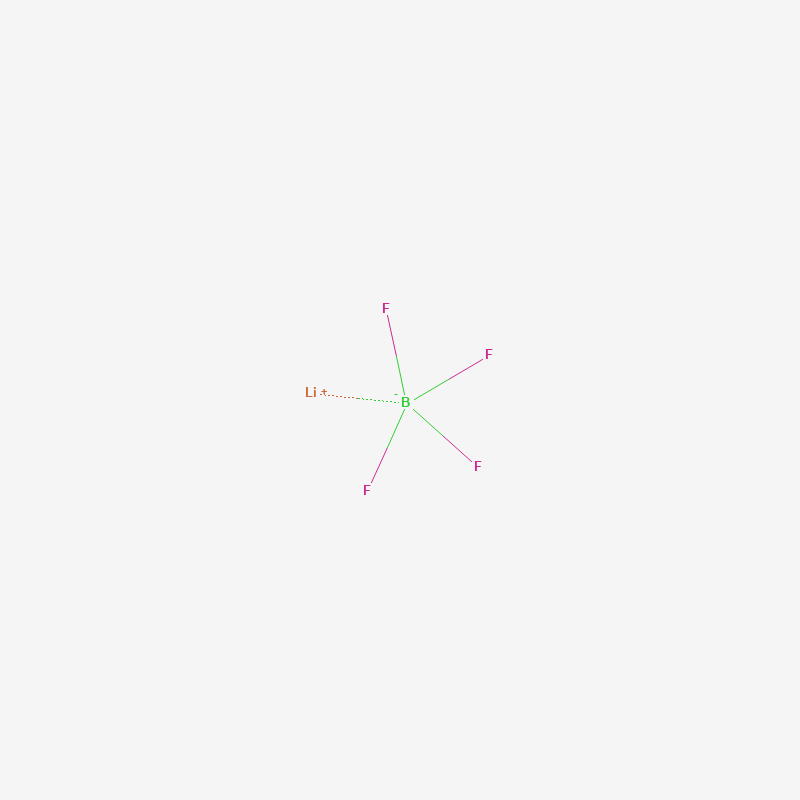
1.25×
lithium tetrafluoroborate Formula
- CAS Number
- 14283-07-9
- Molecular formula
- BF4Li
- Molecular weight
- 93.8
- Exact mass
- 94.0189212
- IUPAC name
- lithium tetrafluoroborate
- SMILES
[Li+].[B-](F)(F)(F)F- InChI
InChI=1S/BF4.Li/c2-1(3,4)5;/q-1;+1- InChIKey
UFXJWFBILHTTET-UHFFFAOYSA-N
Data source: Pubchem
view
lithium tetrafluoroborate Industries & Uses
Battery Manufacturing
lithium tetrafluoroborate Synonyms (32 total)
AKOS015832926
AKOS015903597
Borate(1-), tetrafluoro-, lithium
DTXCID601024166
DTXSID00884741
Lithium boridefluoride
lithium borofluoride
Lithium fluoroborate
Lithium tetrafluoridoborate(1-)
lithium;tetrafluoroborate
Lithium tetrafluoroborate
LithiumTetrafluoroborate
Lithium tetrafluoroborate, anhydrous
Lithium tetrafluoroborate (LiBF4 )
LITHIUM TETRAFLUOROBORATE [MI]
RefChem:153770
14283-07-9
238-178-9
AF751CNK2N
BF4Li
DB-129975
F002848
F20357
FL104356
L0133
LiBF4
Lithium tetrafluoroborate, technical grade
Lithium tetrafluoroborate, Trace metals grade 99.9%
MFCD00011087
NS00086947
Q2754907
SCHEMBL50207
lithium tetrafluoroborate Safety & hazards
Signal wordDanger
Hazard statements
- H302 (97.8%): Harmful if swallowed [Warning Acute toxicity, oral]
- H312 (24.3%): Harmful in contact with skin [Warning Acute toxicity, dermal]
- H314 (85.7%): Causes severe skin burns and eye damage [Danger Skin corrosion/irritation]
- H315 (13.9%): Causes skin irritation [Warning Skin corrosion/irritation]
- H318 (47.8%): Causes serious eye damage [Danger Serious eye damage/eye irritation]
- H319 (13.9%): Causes serious eye irritation [Warning Serious eye damage/eye irritation]
- H332 (23%): Harmful if inhaled [Warning Acute toxicity, inhalation]
- H302: Harmful if swallowed [Warning Acute toxicity, oral]
- H315: Causes skin irritation [Warning Skin corrosion/irritation]
- H335: May cause respiratory irritation [Warning Specific target organ toxicity, single exposure; Respiratory tract irritation]
- H336: May cause drowsiness or dizziness [Warning Specific target organ toxicity, single exposure; Narcotic effects]
- H360: May damage fertility or the unborn child [Danger Reproductive toxicity]
- H362: May cause harm to breast-fed children [Reproductive toxicity, effects on or via lactation]
- H370: Causes damage to organs [Danger Specific target organ toxicity, single exposure]
- H372: Causes damage to organs through prolonged or repeated exposure [Danger Specific target organ toxicity, repeated exposure]
- H402: Harmful to aquatic life [Hazardous to the aquatic environment, acute hazard]
- H412: Harmful to aquatic life with long lasting effects [Hazardous to the aquatic environment, long-term hazard]
- H319: Causes serious eye irritation [Warning Serious eye damage/eye irritation]
Data sourced from PubChem
