mercury(II) chloride Chemical Formula
dichloromercury
mercury(II) chloride CAS No: 7487-94-7 mercury(II) chloride Molecular formula: Cl2Hg PubChem CID: 24085
Hazard
Danger
mercury(II) chloride Chemical Manufacturers and suppliers listings
No active product listings for mercury(II) chloride chemical yet.
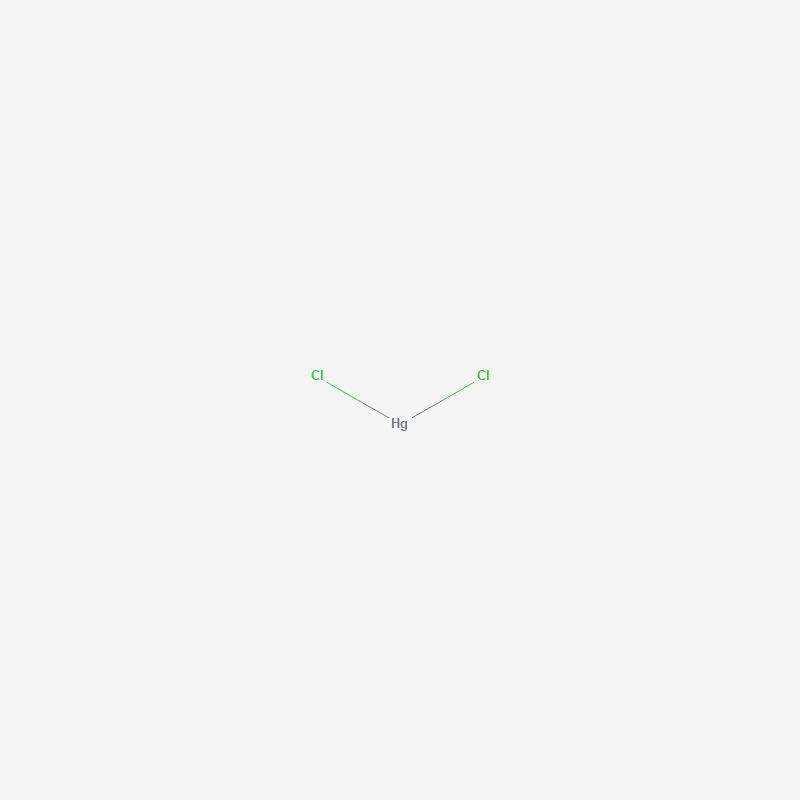
mercury(II) chloride Structure
1.25×
Mercury dichloride is a mercury coordination entity made up of linear triatomic molecules in which a mercury atom is bonded to two chlorines. Water-soluble, it is highly toxic. Once used in a wide variety of applications, including preserving wood and anatomical specimens, embalming and disinfecting, as an intensifier in photography, as a mordant for rabbit and beaver furs, and freeing gold from lead, its use has markedly declined as less toxic alternatives have been developed. It has a role as a sensitiser.
mercury(II) chloride Formula
- CAS Number
- 7487-94-7
- Molecular formula
- Cl2Hg
- Molecular weight
- 271.50
- Exact mass
- 271.908349
- IUPAC name
- dichloromercury
- SMILES
Cl[Hg]Cl- InChI
InChI=1S/2ClH.Hg/h2*1H;/q;;+2/p-2- InChIKey
LWJROJCJINYWOX-UHFFFAOYSA-L
Data source: Pubchem
view
mercury(II) chloride Industries & Uses
Aluminum Producing
Steel Producing
Metal Preparation and Pouring
Electroplating
Battery Manufacturing
Applying Wood Preservatives
Using Disinfectants or Biocides
Leather Tanning and Processing
Photographic Processing
Fur Dressing and Dyeing
Textiles (Printing, Dyeing, or Finishing)
mercury(II) chloride Synonyms (101 total)
231-299-8
53GH7MZT1R
7487-94-7
Abavit B
Bichloride, Mercury
Bichloride of mercury
Bichlorure de mercure
Bichlorure de mercure [French]
Calochlor
Calocure
Caswell No. 544
CCRIS 4838
CHEBI:31823
Chloride, Mercuric
Chlorid rtutnaty
Chlorid rtutnaty [Czech]
Chlorure mercurique
Chlorure mercurique [French]
Chlorure mercurique [ISO-French]
cloruro de mercurio
ClHgCl
Cloruro di mercurio
Corrosive mercury chloride
Corrosive sublimate
D01905
DB13765
Dichloride, Mercury
Dichloromercury
dichlorure de mercure
DTXCID30811
DTXSID5020811
EINECS 231-299-8
EPA Pesticide Chemical Code 052001
Epitope ID:158532
Fungchex
HgCl2
HSDB 33
Hydraargyrum bichloratum
hydrargyrum bichloratum
Mercuric bichloride
MERCURIC CHLORIDE
Mercuric chloride (JAN)
Mercuric chloride [JAN]
Mercuric chloride [JAN:ISO]
Mercuric chloride, solid
Mercuric chloride [UN1624] [Poison]
Mercuric Perchloride
Mercurius Corrosivus
Mercurius corrosivus 30C
Mercury(2+) chloride
Mercury bichloride
Mercury chloride (2)
Mercury chloride (HgCl(2))
Mercury chloride (HgCl2)
Mercury dichloride
mercury (II)chloride
mercury(II)-chloride
mercury(II)chloride
Mercury(II) chloride
Mercury (II) Chloride
Mercury(II) chloride, >=98%
Mercury(II) chloride, 99.999% trace metals basis
Mercury(II) chloride, ACS reagent, >=99.5%
Mercury(II) chloride, anhydrous, beads, -10 mesh, 99.999% trace metals basis
Mercury(II) chloride, anhydrous, powder, 99.998% trace metals basis
Mercury(II) chloride, AR, >=99%
Mercury(II) chloride, JIS special grade, >=99.5%
Mercury(II) chloride, LR, >=99%
Mercury(II) chloride, p.a., ACS reagent, 99.5%
Mercury(II) chloride, Puratronic?
Mercury(II) chloride, puriss. p.a., ACS reagent, >=99.5% (KT)
Mercury(II) chloride, ReagentPlus(R), 99%
Mercury perchloride
NCGC00249199-01
NCI60_003160
NCI-C60173
NSC 353255
NSC-353255
NSC353255
Perchloride, Mercuric
Perchloride, Mercury
Perchloride of mercury
Q143200
Quecksilber chlorid
Quecksilber chlorid [German]
Quecksilber(II)-chlorid
RefChem:6000
SCHEMBL19131
Sublimat
Sublimat [Czech]
Sublimate
Sublimate, Corrosive
Sulem
Sulema
Sulema [Russian]
TL 898
UN 1624
UN1624
UNII-53GH7MZT1R
USP Solution Mercuric Chloride TS Conforms to USP
WLN: HG G2
mercury(II) chloride Safety & hazards
Signal wordDanger
Hazard statements
- H300: Fatal if swallowed [Danger Acute toxicity, oral]
- H314: Causes severe skin burns and eye damage [Danger Skin corrosion/irritation]
- H341: Suspected of causing genetic defects [Warning Germ cell mutagenicity]
- H372 **: Causes damage to organs through prolonged or repeated exposure [Danger Specific target organ toxicity, repeated exposure]
- H400: Very toxic to aquatic life [Warning Hazardous to the aquatic environment, acute hazard]
- H410: Very toxic to aquatic life with long lasting effects [Warning Hazardous to the aquatic environment, long-term hazard]
- H300+H310 (17.4%): Fatal if swallowed or in contact with skin [Danger Acute toxicity, oral; acute toxicity, dermal]
- H300 (100%): Fatal if swallowed [Danger Acute toxicity, oral]
- H310 (26.6%): Fatal in contact with skin [Danger Acute toxicity, dermal]
- H314 (100%): Causes severe skin burns and eye damage [Danger Skin corrosion/irritation]
- H317 (47.7%): May cause an allergic skin reaction [Warning Sensitization, Skin]
- H318 (47.7%): Causes serious eye damage [Danger Serious eye damage/eye irritation]
- H341 (99.5%): Suspected of causing genetic defects [Warning Germ cell mutagenicity]
- H361 (99.5%): Suspected of damaging fertility or the unborn child [Warning Reproductive toxicity]
- H372 (100%): Causes damage to organs through prolonged or repeated exposure [Danger Specific target organ toxicity, repeated exposure]
- H400 (100%): Very toxic to aquatic life [Warning Hazardous to the aquatic environment, acute hazard]
- H410 (100%): Very toxic to aquatic life with long lasting effects [Warning Hazardous to the aquatic environment, long-term hazard]
- H315: Causes skin irritation [Warning Skin corrosion/irritation]
- H317: May cause an allergic skin reaction [Warning Sensitization, Skin]
- H319: Causes serious eye irritation [Warning Serious eye damage/eye irritation]
- H360: May damage fertility or the unborn child [Danger Reproductive toxicity]
- H370: Causes damage to organs [Danger Specific target organ toxicity, single exposure]
- H372: Causes damage to organs through prolonged or repeated exposure [Danger Specific target organ toxicity, repeated exposure]
- H310: Fatal in contact with skin [Danger Acute toxicity, dermal]
Data sourced from PubChem