mercury(II) oxide Chemical Formula
oxomercury
mercury(II) oxide CAS No: 21908-53-2 mercury(II) oxide Molecular formula: HgO PubChem CID: 30856
Hazard
Danger
mercury(II) oxide Chemical Manufacturers and suppliers listings
No active product listings for mercury(II) oxide chemical yet.
mercury(II) oxide Structure
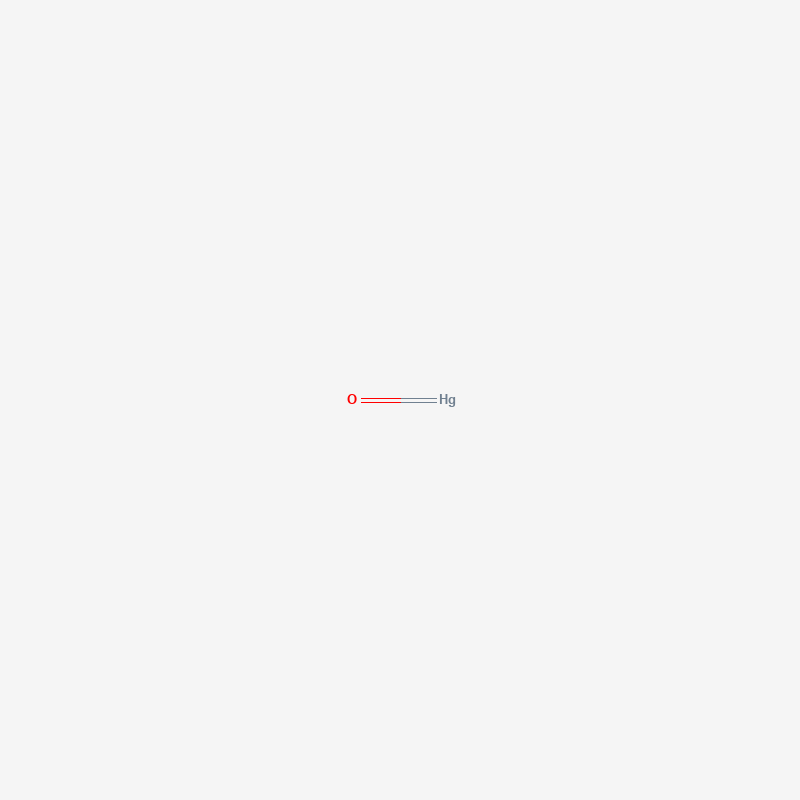
1.25×
mercury(II) oxide Formula
- CAS Number
- 21908-53-2
- Molecular formula
- HgO
- Molecular weight
- 216.59
- Exact mass
- 217.965558
- IUPAC name
- oxomercury
- SMILES
O=[Hg]- InChI
InChI=1S/Hg.O- InChIKey
UKWHYYKOEPRTIC-UHFFFAOYSA-N
Data source: Pubchem
view
mercury(II) oxide Industries & Uses
Battery Manufacturing
Painting (Pigments, Binders, and Biocides)
Using Disinfectants or Biocides
Farming (Pesticides)
mercury(II) oxide Synonyms (74 total)
12653-71-3
21908-53-2
244-654-7
AI3-02738
AKOS015903278
BP-30081
Caswell No. 544A
C.I. 77760
CI 77760
DTXCID2022125
DTXSID4042125
EINECS 244-654-7
Gelbes quecksilberoxyd
HSDB 1265
Hydrargyrum oxid flav
Hydrargyrum oxydatum rubrum
IY191986AO
Mercuric(II) oxide red
MERCURIC OXIDE
Mercuric oxide (HgO)
EPA Pesticide Chemical Code 052102
Mercuric(II) oxide yellow, A.C.S. reagent
Mercuric oxide (red)
Mercuric oxide red
Mercuric oxide, red
Mercuric oxide yellow
Mercuric oxide, yellow
Mercuric oxide, yellow [NF]
Mercurius praecipitatus ruber
Mercury(2+) oxide
mercury (II) oxide
mercury (II)oxide
mercury(II)oxide
mercury-(II)-oxide
Mercury(II) oxide
Mercury(II) oxide, 98%
Mercury(II) oxide, 99.999% trace metals basis
Mercury(II) oxide, p.a., ACS reagent, 99.0%
mercury (II) oxide red
Mercury(II) oxide red
Mercury(II) oxide, red
Mercury(II) oxide red, ACS reagent
Mercury(II) oxide red, ACS reagent, >=99.0%
Mercury (II) oxide yellow
Mercury(II) oxide, yellow
Mercury(II) oxide yellow, ACS reagent, >=99.0%
Mercury(II) oxide yellow, p.a., ACS reagent, 99.0%
Mercury oxide (HgO)
Mercury oxide [UN1641] [Poison]
Natural montroydite
ossido di mercurio
Oxide mercurique jaune
Oxido amarillo de mercurio
oxido de mercurio
(Oxido)mercury
oxomercury
Oxyde de mercure
Oxyde de mercure [French]
Oxyde mercurique
Oxyde mercurique [ISO-French]
Q174727
Quecksilberoxyd
Red mercuric oxide
Red oxide of mercury
Red Precipitate
RefChem:6001
Santar
Santar M
SCHEMBL60790
UN1641
UNII-IY191986AO
Yellow mercuric oxide
Yellow oxide of mercury
Yellow precipitate
mercury(II) oxide Safety & hazards
Signal wordDanger
Hazard statements
- H300 (100%): Fatal if swallowed [Danger Acute toxicity, oral]
- H310 (98.7%): Fatal in contact with skin [Danger Acute toxicity, dermal]
- H330 (100%): Fatal if inhaled [Danger Acute toxicity, inhalation]
- H373 (100%): May causes damage to organs through prolonged or repeated exposure [Warning Specific target organ toxicity, repeated exposure]
- H400 (98.7%): Very toxic to aquatic life [Warning Hazardous to the aquatic environment, acute hazard]
- H410 (100%): Very toxic to aquatic life with long lasting effects [Warning Hazardous to the aquatic environment, long-term hazard]
- H300: Fatal if swallowed [Danger Acute toxicity, oral]
- H311: Toxic in contact with skin [Danger Acute toxicity, dermal]
- H315: Causes skin irritation [Warning Skin corrosion/irritation]
- H317: May cause an allergic skin reaction [Warning Sensitization, Skin]
- H319: Causes serious eye irritation [Warning Serious eye damage/eye irritation]
- H360: May damage fertility or the unborn child [Danger Reproductive toxicity]
- H370: Causes damage to organs [Danger Specific target organ toxicity, single exposure]
- H372: Causes damage to organs through prolonged or repeated exposure [Danger Specific target organ toxicity, repeated exposure]
- H335: May cause respiratory irritation [Warning Specific target organ toxicity, single exposure; Respiratory tract irritation]
Data sourced from PubChem