nickel(II) carbonate Chemical Formula
nickel(2+) carbonate
nickel(II) carbonate CAS No: 3333-67-3 nickel(II) carbonate Molecular formula: CNiO3 PubChem CID: 18746
Hazard
Danger
nickel(II) carbonate Chemical Manufacturers and suppliers listings
No active product listings for nickel(II) carbonate chemical yet.
nickel(II) carbonate Structure
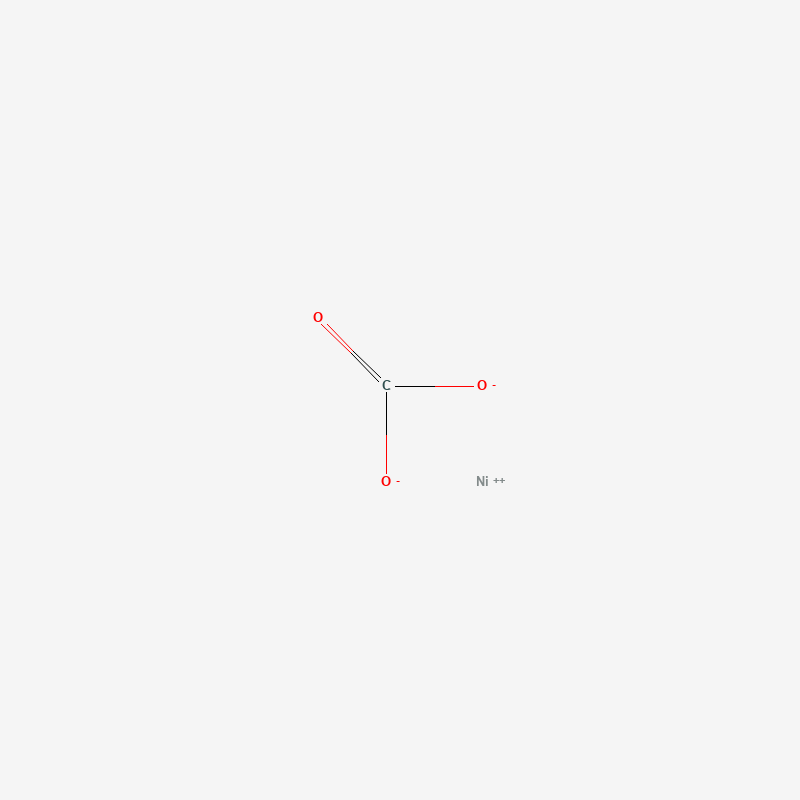
1.25×
Nickel Carbonate can cause cancer according to California Labor Code.
nickel(II) carbonate Formula
- CAS Number
- 3333-67-3
- Molecular formula
- CNiO3
- Molecular weight
- 118.702
- Exact mass
- 117.920086
- IUPAC name
- nickel(2+) carbonate
- SMILES
C(=O)([O-])[O-].[Ni+2]- InChI
InChI=1S/CH2O3.Ni/c2-1(3)4;/h(H2,2,3,4);/q;+2/p-2- InChIKey
ZULUUIKRFGGGTL-UHFFFAOYSA-L
Data source: Pubchem
view
nickel(II) carbonate Industries & Uses
Electroplating
Sewer and Wastewater Treatment
Glass Manufacturing
nickel(II) carbonate Synonyms (36 total)
16337-84-1
3333-67-3
AKOS015903622
Carbonic acid, nickel salt
Carbonic acid, nickel salt (1:1)
C.I. 77779
CI 77779
CI No. 77779
DTXSID201333983
EINECS 222-068-2
EINECS 240-408-8
HSDB 1662
MFCD00011144
nickel(2+) carbonate
nickel(2+);carbonate
Nickel(2+) carbonate (NiCO3)
Nickelcarbonate
NICKEL CARBONATE
Nickel carbonate (NiCO3)
Nickel (II) carbonate
Carbonic acid, nickel(2+) salt (1:1)
Carbonicacid, nickel(2+) salt (1:1)
CNiO3
Nickel, [carbonato(2-)-I masculineO]-
Nickel(II) carbonate
Nickel(II) carbonate ACS Grade
Nickel(II) carbonate, anhydrous
Nickel(II) carbonate, anhydrous, Trace metals grade
Nickel monocarbonate
nickelous;carbonate
Nickelous carbonate
NS00086999
Q417856
SCHEMBL122180
UNII-WM50SQU829
WM50SQU829
nickel(II) carbonate Safety & hazards
Signal wordDanger
Hazard statements
- H302: Harmful if swallowed [Warning Acute toxicity, oral]
- H315: Causes skin irritation [Warning Skin corrosion/irritation]
- H317: May cause an allergic skin reaction [Warning Sensitization, Skin]
- H332: Harmful if inhaled [Warning Acute toxicity, inhalation]
- H334: May cause allergy or asthma symptoms or breathing difficulties if inhaled [Danger Sensitization, respiratory]
- H341: Suspected of causing genetic defects [Warning Germ cell mutagenicity]
- H372 **: Causes damage to organs through prolonged or repeated exposure [Danger Specific target organ toxicity, repeated exposure]
- H400: Very toxic to aquatic life [Warning Hazardous to the aquatic environment, acute hazard]
- H410: Very toxic to aquatic life with long lasting effects [Warning Hazardous to the aquatic environment, long-term hazard]
- H302+H332 (15.1%): Harmful if swallowed or if inhaled [Warning Acute toxicity, oral; acute toxicity, inhalation]
- H302 (98.3%): Harmful if swallowed [Warning Acute toxicity, oral]
- H315 (94.1%): Causes skin irritation [Warning Skin corrosion/irritation]
- H317 (100%): May cause an allergic skin reaction [Warning Sensitization, Skin]
- H332 (98.3%): Harmful if inhaled [Warning Acute toxicity, inhalation]
- H334 (98.3%): May cause allergy or asthma symptoms or breathing difficulties if inhaled [Danger Sensitization, respiratory]
- H341 (98.3%): Suspected of causing genetic defects [Warning Germ cell mutagenicity]
- H350 (98.3%): May cause cancer [Danger Carcinogenicity]
- H360 (98.3%): May damage fertility or the unborn child [Danger Reproductive toxicity]
- H372 (98.3%): Causes damage to organs through prolonged or repeated exposure [Danger Specific target organ toxicity, repeated exposure]
- H400 (99.2%): Very toxic to aquatic life [Warning Hazardous to the aquatic environment, acute hazard]
- H410 (100%): Very toxic to aquatic life with long lasting effects [Warning Hazardous to the aquatic environment, long-term hazard]
- H302 (100%): Harmful if swallowed [Warning Acute toxicity, oral]
- H315 (100%): Causes skin irritation [Warning Skin corrosion/irritation]
- H332 (100%): Harmful if inhaled [Warning Acute toxicity, inhalation]
- H334 (100%): May cause allergy or asthma symptoms or breathing difficulties if inhaled [Danger Sensitization, respiratory]
- H341 (100%): Suspected of causing genetic defects [Warning Germ cell mutagenicity]
- H350 (100%): May cause cancer [Danger Carcinogenicity]
- H360 (100%): May damage fertility or the unborn child [Danger Reproductive toxicity]
- H372 (100%): Causes damage to organs through prolonged or repeated exposure [Danger Specific target organ toxicity, repeated exposure]
- H400 (100%): Very toxic to aquatic life [Warning Hazardous to the aquatic environment, acute hazard]
- H351 (100%): Suspected of causing cancer [Warning Carcinogenicity]
- H319: Causes serious eye irritation [Warning Serious eye damage/eye irritation]
- H330: Fatal if inhaled [Danger Acute toxicity, inhalation]
- H372: Causes damage to organs through prolonged or repeated exposure [Danger Specific target organ toxicity, repeated exposure]
Data sourced from PubChem
