nickel(II) chloride Chemical Formula
dichloronickel
nickel(II) chloride CAS No: 7718-54-9 nickel(II) chloride Molecular formula: Cl2Ni PubChem CID: 24385
Hazard
Danger
nickel(II) chloride Chemical Manufacturers and suppliers listings
No active product listings for nickel(II) chloride chemical yet.
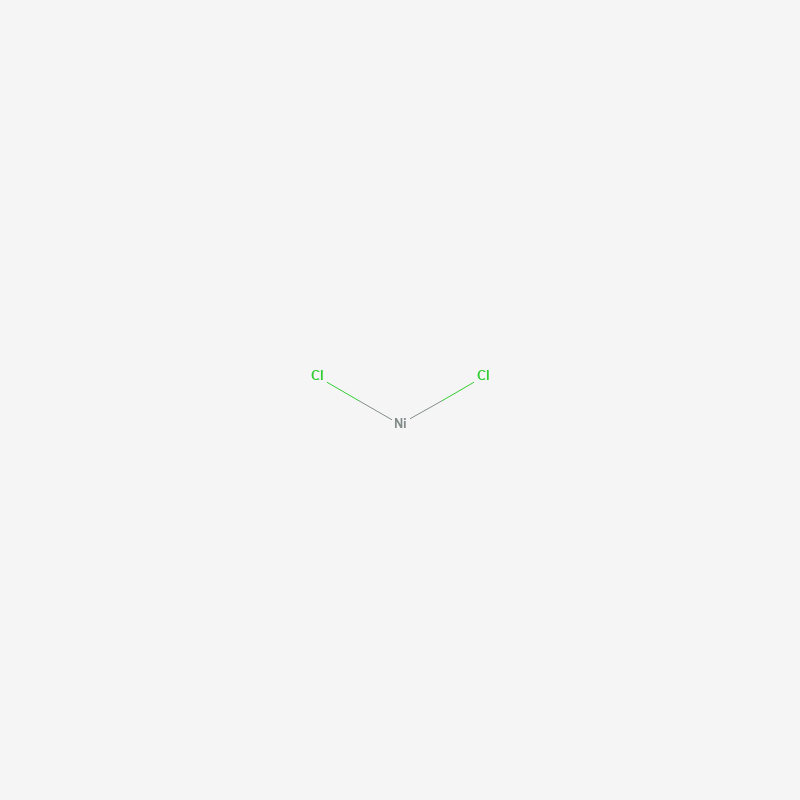
nickel(II) chloride Structure
1.25×
Nickel dichloride is a compound of nickel and chloride in which the ratio of nickel (in the +2 oxidation state) to chloride is 1:2. It has a role as a calcium channel blocker and a hapten.
nickel(II) chloride Formula
- CAS Number
- 7718-54-9
- Molecular formula
- Cl2Ni
- Molecular weight
- 129.60
- Exact mass
- 127.873047
- IUPAC name
- dichloronickel
- SMILES
Cl[Ni]Cl- InChI
InChI=1S/2ClH.Ni/h2*1H;/q;;+2/p-2- InChIKey
QMMRZOWCJAIUJA-UHFFFAOYSA-L
Data source: Pubchem
view
nickel(II) chloride Industries & Uses
Electroplating
nickel(II) chloride Synonyms (52 total)
231-743-0
253-399-0
37211-05-5
696BNE976J
7718-54-9
BP-14194
CCRIS 1788
CHEBI:34887
dichloro nickel
dichloronickel
dichloronickel (II)
dichloronickel(II)
DTXCID5020316
DTXSID7040316
EC 231-743-0
EINECS 231-743-0
EINECS 253-399-0
HSDB 860
Niccolum Muriaticum
Nichel(II) chloride
nickel (11) chloride
Nickel(2+) chloride
Nickelchloride
NICKEL CHLORIDE
Nickel chloride Analytical Titrant
Nickel chloride (NiCl2)
Nickel dichloride
Nickel dichloride (nicl2)
nickel(II)chloride
nickel-(II)-chloride
Nickel (II) chloride
Nickel(II) chloride
Nickel(II) chloride (1:2)
Nickel(II) chloride, 98%
Nickel(II) chloride anhydrous
Nickel(II) chloride, anhydrous
Nickel(II) chloride, anhydrous, powder, 99.99% trace metals basis
Nickel(II) chloride, LR, 44.6-46% Ni basis
Nickel(II) chloride, ultra dry
Nickelous chloride
(NiCl2)
[NiCl2]
NiCl2
NI(II) chloride
NSC 254532
NSC-254532
NSC254532
Q29397
RefChem:6058
SCHEMBL24280
UNII-696BNE976J
WLN: NI G2
nickel(II) chloride Safety & hazards
Signal wordDanger
Hazard statements
- H301: Toxic if swallowed [Danger Acute toxicity, oral]
- H315: Causes skin irritation [Warning Skin corrosion/irritation]
- H317: May cause an allergic skin reaction [Warning Sensitization, Skin]
- H331: Toxic if inhaled [Danger Acute toxicity, inhalation]
- H334: May cause allergy or asthma symptoms or breathing difficulties if inhaled [Danger Sensitization, respiratory]
- H341: Suspected of causing genetic defects [Warning Germ cell mutagenicity]
- H372 **: Causes damage to organs through prolonged or repeated exposure [Danger Specific target organ toxicity, repeated exposure]
- H400: Very toxic to aquatic life [Warning Hazardous to the aquatic environment, acute hazard]
- H410: Very toxic to aquatic life with long lasting effects [Warning Hazardous to the aquatic environment, long-term hazard]
- H301+H331 (18.2%): Toxic if swallowed or if inhaled [Danger Acute toxicity, oral; acute toxicity, inhalation]
- H301 (100%): Toxic if swallowed [Danger Acute toxicity, oral]
- H315 (100%): Causes skin irritation [Warning Skin corrosion/irritation]
- H317 (99.6%): May cause an allergic skin reaction [Warning Sensitization, Skin]
- H331 (100%): Toxic if inhaled [Danger Acute toxicity, inhalation]
- H334 (99.6%): May cause allergy or asthma symptoms or breathing difficulties if inhaled [Danger Sensitization, respiratory]
- H341 (99.8%): Suspected of causing genetic defects [Warning Germ cell mutagenicity]
- H350 (64%): May cause cancer [Danger Carcinogenicity]
- H360 (64.2%): May damage fertility or the unborn child [Danger Reproductive toxicity]
- H372 (99.8%): Causes damage to organs through prolonged or repeated exposure [Danger Specific target organ toxicity, repeated exposure]
- H400 (99.8%): Very toxic to aquatic life [Warning Hazardous to the aquatic environment, acute hazard]
- H410 (100%): Very toxic to aquatic life with long lasting effects [Warning Hazardous to the aquatic environment, long-term hazard]
- H330: Fatal if inhaled [Danger Acute toxicity, inhalation]
- H302: Harmful if swallowed [Warning Acute toxicity, oral]
- H350: May cause cancer [Danger Carcinogenicity]
- H360: May damage fertility or the unborn child [Danger Reproductive toxicity]
- H371: May cause damage to organs [Warning Specific target organ toxicity, single exposure]
- H373: May causes damage to organs through prolonged or repeated exposure [Warning Specific target organ toxicity, repeated exposure]
- H361: Suspected of damaging fertility or the unborn child [Warning Reproductive toxicity]
- H370: Causes damage to organs [Danger Specific target organ toxicity, single exposure]
- H372: Causes damage to organs through prolonged or repeated exposure [Danger Specific target organ toxicity, repeated exposure]
Data sourced from PubChem
