nickel(II) chloride hexahydrate Chemical Formula
nickel(2+);dichloride;hexahydrate
nickel(II) chloride hexahydrate CAS No: 7791-20-0 nickel(II) chloride hexahydrate Molecular formula: Cl2H12NiO6 PubChem CID: 24645
Hazard
Danger
nickel(II) chloride hexahydrate Chemical Manufacturers and suppliers listings
No active product listings for nickel(II) chloride hexahydrate chemical yet.
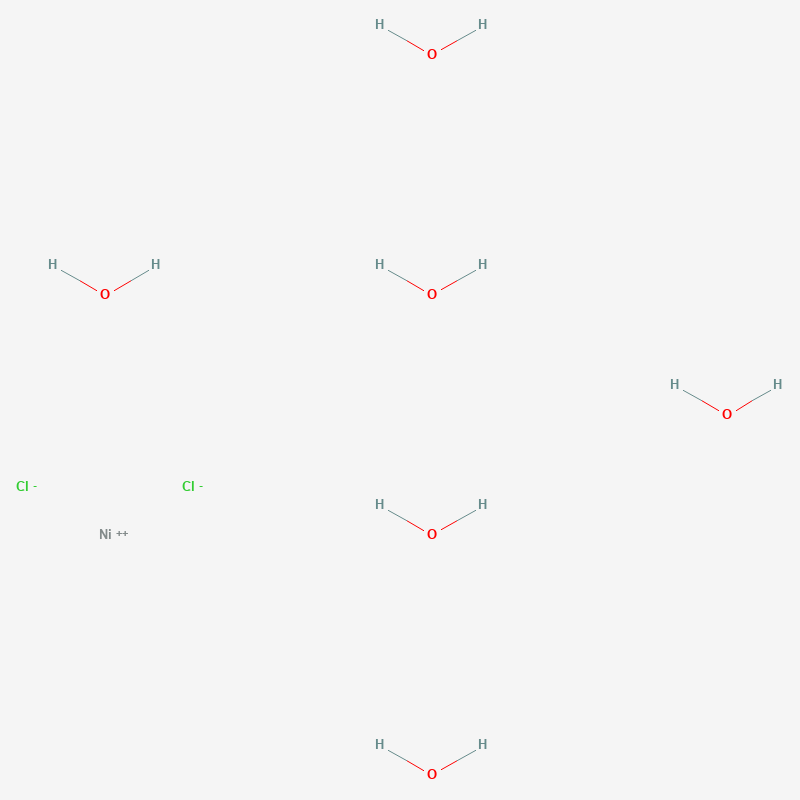
nickel(II) chloride hexahydrate Structure
1.25×
Nickel chloride hexahydrate is a hydrate of nickel chloride containing nickel (in the +2 oxidation state), chloride and water moeities in the ratio 1:2:6. It has a role as a sensitiser. It contains a nickel dichloride.
nickel(II) chloride hexahydrate Formula
- CAS Number
- 7791-20-0
- Molecular formula
- Cl2H12NiO6
- Molecular weight
- 237.69
- Exact mass
- 235.936435
- IUPAC name
- nickel(2+);dichloride;hexahydrate
- SMILES
O.O.O.O.O.O.[Cl-].[Cl-].[Ni+2]- InChI
InChI=1S/2ClH.Ni.6H2O/h2*1H;;6*1H2/q;;+2;;;;;;/p-2- InChIKey
LAIZPRYFQUWUBN-UHFFFAOYSA-L
Data source: Pubchem
view
nickel(II) chloride hexahydrate Industries & Uses
Electroplating
nickel(II) chloride hexahydrate Synonyms (22 total)
NICKEL(2+) CHLORIDE HEXAHYDRATE
nickel(2+);dichloride;hexahydrate
Nickel chloride hexahydrate
NICKEL CHLORIDE HEXAHYDRATE [MI]
NICKEL CHLORIDE HEXAHYDRATE (NICL2.6H2O)
Nickel chloride (NiCl2), hexahydrate
NICKEL CHLORIDE (NICL2) HYDRATE (1:6)
nickel chloride--water (1/6)
Nickel dichloride hexahydrate
Nickel(II) chloride hexahydrate
Nickel(II) chloride, hexahydrate
Nickelous chloride hexahydrate
nickelous;dichloride;hexahydrate
616-576-7
7791-20-0
CHEBI:53542
Cl2NiO6
DTXCID5021170
DTXSID7041170
RefChem:853859
SCHEMBL117189
T8365BUD85
nickel(II) chloride hexahydrate Safety & hazards
Signal wordDanger
Hazard statements
- H301+H331 (16%): Toxic if swallowed or if inhaled [Danger Acute toxicity, oral; acute toxicity, inhalation]
- H301 (100%): Toxic if swallowed [Danger Acute toxicity, oral]
- H315 (94.5%): Causes skin irritation [Warning Skin corrosion/irritation]
- H317 (99.2%): May cause an allergic skin reaction [Warning Sensitization, Skin]
- H331 (92.8%): Toxic if inhaled [Danger Acute toxicity, inhalation]
- H334 (94.1%): May cause allergy or asthma symptoms or breathing difficulties if inhaled [Danger Sensitization, respiratory]
- H341 (92.8%): Suspected of causing genetic defects [Warning Germ cell mutagenicity]
- H350 (69.6%): May cause cancer [Danger Carcinogenicity]
- H360 (76.4%): May damage fertility or the unborn child [Danger Reproductive toxicity]
- H372 (92.8%): Causes damage to organs through prolonged or repeated exposure [Danger Specific target organ toxicity, repeated exposure]
- H400 (99.6%): Very toxic to aquatic life [Warning Hazardous to the aquatic environment, acute hazard]
- H410 (93.7%): Very toxic to aquatic life with long lasting effects [Warning Hazardous to the aquatic environment, long-term hazard]
- H301: Toxic if swallowed [Danger Acute toxicity, oral]
- H317: May cause an allergic skin reaction [Warning Sensitization, Skin]
- H334: May cause allergy or asthma symptoms or breathing difficulties if inhaled [Danger Sensitization, respiratory]
- H350: May cause cancer [Danger Carcinogenicity]
- H360: May damage fertility or the unborn child [Danger Reproductive toxicity]
- H373: May causes damage to organs through prolonged or repeated exposure [Warning Specific target organ toxicity, repeated exposure]
- H402: Harmful to aquatic life [Hazardous to the aquatic environment, acute hazard]
- H302: Harmful if swallowed [Warning Acute toxicity, oral]
- H315: Causes skin irritation [Warning Skin corrosion/irritation]
- H331: Toxic if inhaled [Danger Acute toxicity, inhalation]
- H341: Suspected of causing genetic defects [Warning Germ cell mutagenicity]
- H372: Causes damage to organs through prolonged or repeated exposure [Danger Specific target organ toxicity, repeated exposure]
Data sourced from PubChem
