nickel(II) hydroxide Chemical Formula
nickel(2+) dihydroxide
nickel(II) hydroxide CAS No: 12054-48-7 nickel(II) hydroxide Molecular formula: H2NiO2 PubChem CID: 61534
Hazard
Danger
nickel(II) hydroxide Chemical Manufacturers and suppliers listings
No active product listings for nickel(II) hydroxide chemical yet.
nickel(II) hydroxide Structure
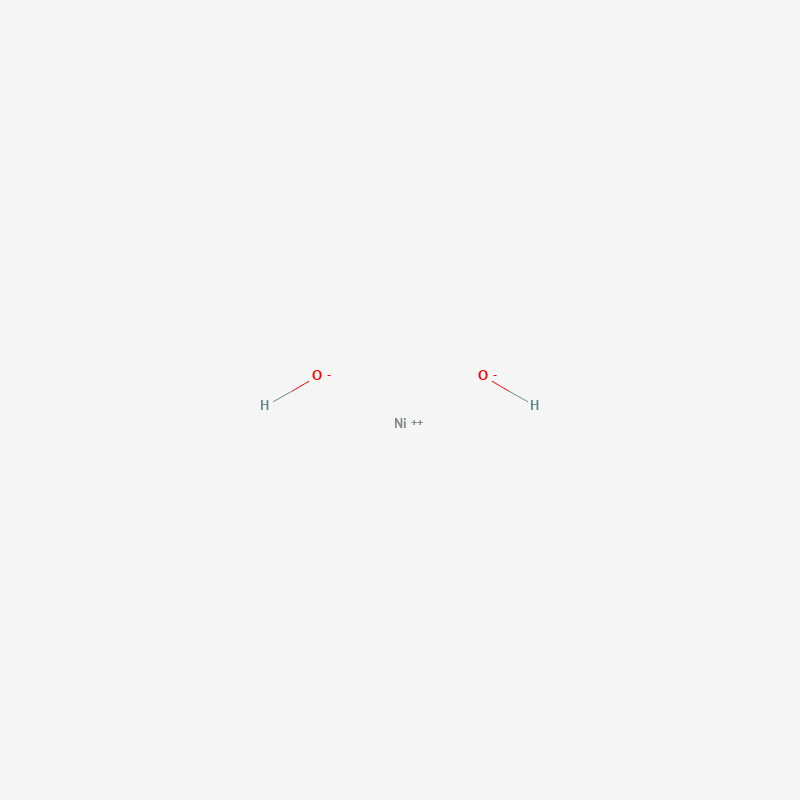
1.25×
Nickel Hydroxide can cause cancer according to California Labor Code.
nickel(II) hydroxide Formula
- CAS Number
- 12054-48-7
- Molecular formula
- H2NiO2
- Molecular weight
- 92.708
- Exact mass
- 91.940821
- IUPAC name
- nickel(2+) dihydroxide
- SMILES
[OH-].[OH-].[Ni+2]- InChI
InChI=1S/Ni.2H2O/h;2*1H2/q+2;;/p-2- InChIKey
BFDHFSHZJLFAMC-UHFFFAOYSA-L
Data source: Pubchem
view
nickel(II) hydroxide Industries & Uses
Battery Manufacturing
nickel(II) hydroxide Synonyms (33 total)
11113-74-9
12054-48-7
234-348-1
235-008-5
AKOS015833776
CCRIS 429
DTXCID00196497
DTXSID90274011
EINECS 234-348-1
Green nickel oxide
L8UW92NW6J
nickel(2+) dihydroxide
nickel(2+);dihydroxide
Nickel(2+) hydroxide
Nickel Dihydroxide
NICKELDIOL
NICKEL HYDROXIDE
NICKEL HYDROXIDE [HSDB]
nickel hydroxide (II)
NICKEL HYDROXIDE [MI]
F982579
H2NiO2
N1202
NICKEL HYDROXIDE (Ni(OH)2)
nickel(II)hydroxide
Nickel(II) hydroxide
Nickelous hydroxide
NiOH2
NS00086010
Q414637
RefChem:165670
SCHEMBL94689
SY061178
nickel(II) hydroxide Safety & hazards
Signal wordDanger
Hazard statements
- H302: Harmful if swallowed [Warning Acute toxicity, oral]
- H315: Causes skin irritation [Warning Skin corrosion/irritation]
- H317: May cause an allergic skin reaction [Warning Sensitization, Skin]
- H332: Harmful if inhaled [Warning Acute toxicity, inhalation]
- H334: May cause allergy or asthma symptoms or breathing difficulties if inhaled [Danger Sensitization, respiratory]
- H341: Suspected of causing genetic defects [Warning Germ cell mutagenicity]
- H372 **: Causes damage to organs through prolonged or repeated exposure [Danger Specific target organ toxicity, repeated exposure]
- H400: Very toxic to aquatic life [Warning Hazardous to the aquatic environment, acute hazard]
- H410: Very toxic to aquatic life with long lasting effects [Warning Hazardous to the aquatic environment, long-term hazard]
- H302 (100%): Harmful if swallowed [Warning Acute toxicity, oral]
- H315 (98.4%): Causes skin irritation [Warning Skin corrosion/irritation]
- H317 (100%): May cause an allergic skin reaction [Warning Sensitization, Skin]
- H330 (10.6%): Fatal if inhaled [Danger Acute toxicity, inhalation]
- H332 (89.4%): Harmful if inhaled [Warning Acute toxicity, inhalation]
- H334 (99.7%): May cause allergy or asthma symptoms or breathing difficulties if inhaled [Danger Sensitization, respiratory]
- H341 (99.7%): Suspected of causing genetic defects [Warning Germ cell mutagenicity]
- H350 (72.4%): May cause cancer [Danger Carcinogenicity]
- H360 (72.1%): May damage fertility or the unborn child [Danger Reproductive toxicity]
- H372 (99.7%): Causes damage to organs through prolonged or repeated exposure [Danger Specific target organ toxicity, repeated exposure]
- H400 (99.7%): Very toxic to aquatic life [Warning Hazardous to the aquatic environment, acute hazard]
- H410 (99.7%): Very toxic to aquatic life with long lasting effects [Warning Hazardous to the aquatic environment, long-term hazard]
- H315 (100%): Causes skin irritation [Warning Skin corrosion/irritation]
- H332 (100%): Harmful if inhaled [Warning Acute toxicity, inhalation]
- H334 (100%): May cause allergy or asthma symptoms or breathing difficulties if inhaled [Danger Sensitization, respiratory]
- H341 (100%): Suspected of causing genetic defects [Warning Germ cell mutagenicity]
- H350 (100%): May cause cancer [Danger Carcinogenicity]
- H360 (100%): May damage fertility or the unborn child [Danger Reproductive toxicity]
- H372 (100%): Causes damage to organs through prolonged or repeated exposure [Danger Specific target organ toxicity, repeated exposure]
- H400 (100%): Very toxic to aquatic life [Warning Hazardous to the aquatic environment, acute hazard]
- H410 (100%): Very toxic to aquatic life with long lasting effects [Warning Hazardous to the aquatic environment, long-term hazard]
- H350: May cause cancer [Danger Carcinogenicity]
- H372: Causes damage to organs through prolonged or repeated exposure [Danger Specific target organ toxicity, repeated exposure]
Data sourced from PubChem
