nickel(II) iodide Chemical Formula
diiodonickel
nickel(II) iodide CAS No: 13462-90-3 nickel(II) iodide Molecular formula: I2Ni PubChem CID: 26038
Hazard
Danger
nickel(II) iodide Chemical Manufacturers and suppliers listings
No active product listings for nickel(II) iodide chemical yet.
nickel(II) iodide Structure
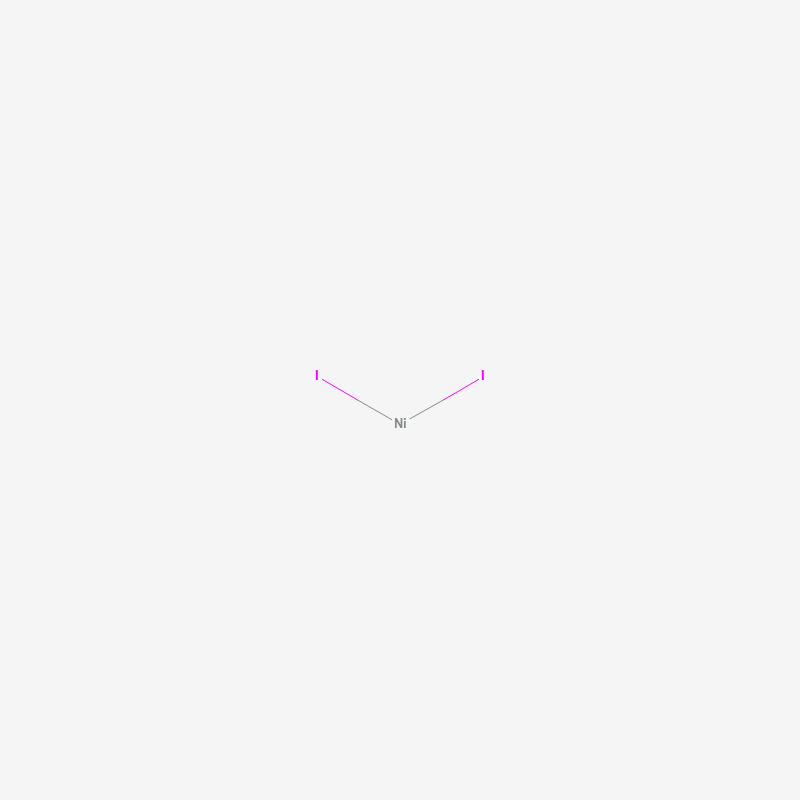
1.25×
nickel(II) iodide Formula
- CAS Number
- 13462-90-3
- Molecular formula
- I2Ni
- Molecular weight
- 312.502
- Exact mass
- 311.74429
- IUPAC name
- diiodonickel
- SMILES
[Ni](I)I- InChI
InChI=1S/2HI.Ni/h2*1H;/q;;+2/p-2- InChIKey
BFSQJYRFLQUZKX-UHFFFAOYSA-L
Data source: Pubchem
view
nickel(II) iodide Synonyms (18 total)
12640-78-7
13462-90-3
AKOS015833439
BP-12498
CS-W001144
Diiodonickel
Nichel(II)idide hexahydrate
nickel(2+);diiodide
nickel(II)iodide
Nickel (II) iodide
Nickel(II) iodide
Nickel(II) iodide, anhydrous
Nickel(II) iodide, powder
Nickeliodide(NiI2)
Q421443
SCHEMBL119980
Ultra Dry Nickel Iodide
Nickel(II) iodide, anhydrous, powder, 99.99% trace metals basis
nickel(II) iodide Safety & hazards
Signal wordDanger
Hazard statements
- H317: May cause an allergic skin reaction [Warning Sensitization, Skin]
- H334: May cause allergy or asthma symptoms or breathing difficulties if inhaled [Danger Sensitization, respiratory]
- H341: Suspected of causing genetic defects [Warning Germ cell mutagenicity]
- H372 **: Causes damage to organs through prolonged or repeated exposure [Danger Specific target organ toxicity, repeated exposure]
- H400: Very toxic to aquatic life [Warning Hazardous to the aquatic environment, acute hazard]
- H410: Very toxic to aquatic life with long lasting effects [Warning Hazardous to the aquatic environment, long-term hazard]
- H317 (100%): May cause an allergic skin reaction [Warning Sensitization, Skin]
- H334 (100%): May cause allergy or asthma symptoms or breathing difficulties if inhaled [Danger Sensitization, respiratory]
- H341 (100%): Suspected of causing genetic defects [Warning Germ cell mutagenicity]
- H350 (95.6%): May cause cancer [Danger Carcinogenicity]
- H360 (95.6%): May damage fertility or the unborn child [Danger Reproductive toxicity]
- H372 (100%): Causes damage to organs through prolonged or repeated exposure [Danger Specific target organ toxicity, repeated exposure]
- H400 (100%): Very toxic to aquatic life [Warning Hazardous to the aquatic environment, acute hazard]
- H410 (100%): Very toxic to aquatic life with long lasting effects [Warning Hazardous to the aquatic environment, long-term hazard]
Data sourced from PubChem