sodium chromate Chemical Formula
disodium;dioxido(dioxo)chromium
sodium chromate CAS No: 7775-11-3 sodium chromate Molecular formula: CrNa2O4 PubChem CID: 24488
Hazard
Danger
sodium chromate Chemical Manufacturers and suppliers listings
No active product listings for sodium chromate chemical yet.
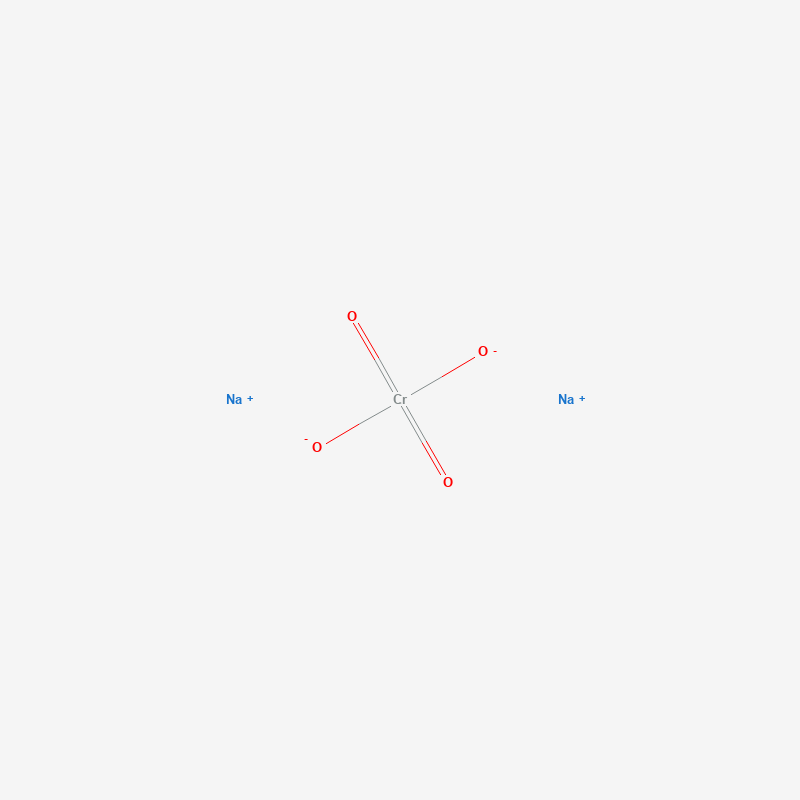
sodium chromate Structure
1.25×
Sodium chromate is an inorganic sodium salt consisting of sodium and chromate ions in a 2:1 ratio. It has a role as a diagnostic agent, a carcinogenic agent, an oxidising agent and a poison. It contains a chromate(2-).
sodium chromate Formula
- CAS Number
- 7775-11-3
- Molecular formula
- CrNa2O4
- Molecular weight
- 161.973
- Exact mass
- 161.899702
- IUPAC name
- disodium;dioxido(dioxo)chromium
- SMILES
[O-][Cr](=O)(=O)[O-].[Na+].[Na+]- InChI
InChI=1S/Cr.2Na.4O/q;2*+1;;;2*-1- InChIKey
PXLIDIMHPNPGMH-UHFFFAOYSA-N
Data source: Pubchem
view
sodium chromate Industries & Uses
Petroleum Production and Refining
Painting (Pigments, Binders, and Biocides)
Applying Wood Preservatives
Leather Tanning and Processing
Textiles (Printing, Dyeing, or Finishing)
sodium chromate Synonyms (41 total)
12680-48-7
231-889-5
6A49BO6K4M
7775-11-3
Caswell No. 757
CCRIS 883
CHEBI:78671
Chromate of soda
Chromic acid, disodium salt
Chromium disodium oxide
Chromium sodium oxide
Chromiumsodium oxide
Disodium chromate
DTXCID5012056
DTXSID7032056
EC 231-889-5
EINECS 231-889-5
HSDB 2962
Na2CrO4
Neutral sodium chromate
Chromic acid (H251CrO4), disodium salt (9CI)
Chromic acid (H2CrO4), disodium salt
Chromic acid (H2CrO4), sodium salt (1:2)
CHROMIC ACID (H2CRO4) SODIUM SALT (1:2)
Chromium sodium oxide (CrNa2O4)
dioxo-2,4-dioxa-3-chroma-1,5-disodapentane
disodium dioxido(dioxo)chromium
disodium;dioxido(dioxo)chromium
Disodium tetrakis(oxido)chromate(2-)
EPA Pesticide Chemical Code 068303
NS00081413
Q407958
Rachromate
RefChem:887411
SCHEMBL65984
SODIUM CHROMATE
Sodium Chromate, Anhydrous
SODIUM CHROMATE [MI]
Sodium chromate(VI)
sodium monochromate
UNII-6A49BO6K4M
sodium chromate Safety & hazards
Signal wordDanger
Hazard statements
- H301: Toxic if swallowed [Danger Acute toxicity, oral]
- H312: Harmful in contact with skin [Warning Acute toxicity, dermal]
- H314: Causes severe skin burns and eye damage [Danger Skin corrosion/irritation]
- H317: May cause an allergic skin reaction [Warning Sensitization, Skin]
- H330: Fatal if inhaled [Danger Acute toxicity, inhalation]
- H334: May cause allergy or asthma symptoms or breathing difficulties if inhaled [Danger Sensitization, respiratory]
- H340: May cause genetic defects [Danger Germ cell mutagenicity]
- H350: May cause cancer [Danger Carcinogenicity]
- H372 **: Causes damage to organs through prolonged or repeated exposure [Danger Specific target organ toxicity, repeated exposure]
- H400: Very toxic to aquatic life [Warning Hazardous to the aquatic environment, acute hazard]
- H410: Very toxic to aquatic life with long lasting effects [Warning Hazardous to the aquatic environment, long-term hazard]
- H301 (100%): Toxic if swallowed [Danger Acute toxicity, oral]
- H312 (100%): Harmful in contact with skin [Warning Acute toxicity, dermal]
- H314 (100%): Causes severe skin burns and eye damage [Danger Skin corrosion/irritation]
- H317 (100%): May cause an allergic skin reaction [Warning Sensitization, Skin]
- H318 (17.6%): Causes serious eye damage [Danger Serious eye damage/eye irritation]
- H330 (100%): Fatal if inhaled [Danger Acute toxicity, inhalation]
- H334 (100%): May cause allergy or asthma symptoms or breathing difficulties if inhaled [Danger Sensitization, respiratory]
- H340 (99.5%): May cause genetic defects [Danger Germ cell mutagenicity]
- H350 (100%): May cause cancer [Danger Carcinogenicity]
- H360 (86.9%): May damage fertility or the unborn child [Danger Reproductive toxicity]
- H372 (100%): Causes damage to organs through prolonged or repeated exposure [Danger Specific target organ toxicity, repeated exposure]
- H400 (100%): Very toxic to aquatic life [Warning Hazardous to the aquatic environment, acute hazard]
- H410 (100%): Very toxic to aquatic life with long lasting effects [Warning Hazardous to the aquatic environment, long-term hazard]
- H360: May damage fertility or the unborn child [Danger Reproductive toxicity]
- H300: Fatal if swallowed [Danger Acute toxicity, oral]
- H318: Causes serious eye damage [Danger Serious eye damage/eye irritation]
- H341: Suspected of causing genetic defects [Warning Germ cell mutagenicity]
- H370: Causes damage to organs [Danger Specific target organ toxicity, single exposure]
- H372: Causes damage to organs through prolonged or repeated exposure [Danger Specific target organ toxicity, repeated exposure]
Data sourced from PubChem