tin(II) oxalate Chemical Formula
oxalate;tin(2+)
tin(II) oxalate CAS No: 814-94-8 tin(II) oxalate Molecular formula: C2O4Sn PubChem CID: 13149
Hazard
Danger
tin(II) oxalate Chemical Manufacturers and suppliers listings
No active product listings for tin(II) oxalate chemical yet.
tin(II) oxalate Structure
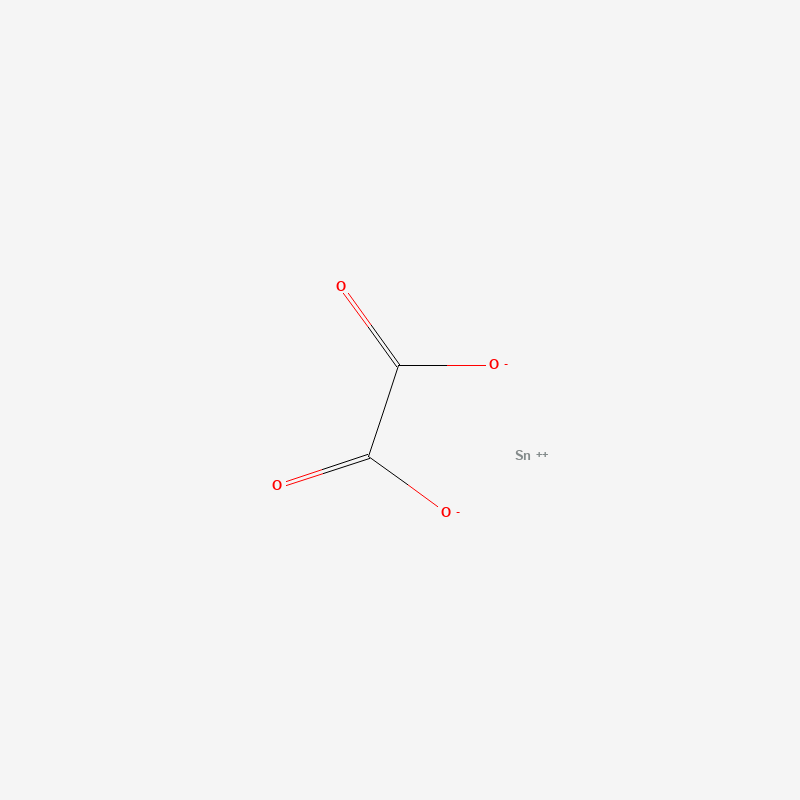
1.25×
tin(II) oxalate Formula
- CAS Number
- 814-94-8
- Molecular formula
- C2O4Sn
- Molecular weight
- 206.73
- Exact mass
- 207.881861
- IUPAC name
- oxalate;tin(2+)
- SMILES
C(=O)(C(=O)[O-])[O-].[Sn+2]- InChI
InChI=1S/C2H2O4.Sn/c3-1(4)2(5)6;/h(H,3,4)(H,5,6);/q;+2/p-2- InChIKey
OQBLGYCUQGDOOR-UHFFFAOYSA-L
Data source: Pubchem
view
tin(II) oxalate Industries & Uses
Textiles (Printing, Dyeing, or Finishing)
tin(II) oxalate Synonyms (32 total)
814-94-8
C2O4Sn
DB-056533
DTXCID4048220
DTXSID1061152
EC 212-414-0
EINECS 212-414-0
FT28283
oxalate;tin(2+)
Oxalic acid tin(2+) salt
Oxalic acid, tin(II) salt
RefChem:185362
SAR72FE8EH
SCHEMBL28425
SNT7960
stannous;oxalate
STANNOUS OXALATE
STANNOUS OXALATE [MI]
Stavelan cinaty
Stavelan cinaty [Czech]
Ethanedioic acid tin(2+) salt
Ethanedioic acid, tin(2+) salt (1:1)
ETHANEDIOIC ACID TIN(2+) SALT (1:1)
Oxalic acid, tin(2+) salt (1:1)
Oxalic acid, tin(2+) salt (1:1) (8CI)
Tin(2+) oxalate
tin(ii)oxalate
Tin II oxalate
Tin(II) oxalate
Tin oxalate
Tin oxalate (snC2O4)
UNII-SAR72FE8EH
tin(II) oxalate Safety & hazards
Signal wordDanger
Hazard statements
- H302+H312+H332 (30.9%): Harmful if swallowed, in contact with skin or if inhaled [Warning Acute toxicity, oral; acute toxicity, dermal; acute toxicity, inhalation]
- H302 (47.5%): Harmful if swallowed [Warning Acute toxicity, oral]
- H312 (47.5%): Harmful in contact with skin [Warning Acute toxicity, dermal]
- H314 (32.6%): Causes severe skin burns and eye damage [Danger Skin corrosion/irritation]
- H317 (32.6%): May cause an allergic skin reaction [Warning Sensitization, Skin]
- H318 (76.2%): Causes serious eye damage [Danger Serious eye damage/eye irritation]
- H332 (32.6%): Harmful if inhaled [Warning Acute toxicity, inhalation]
- H334 (32.6%): May cause allergy or asthma symptoms or breathing difficulties if inhaled [Danger Sensitization, respiratory]
- H372 (32.6%): Causes damage to organs through prolonged or repeated exposure [Danger Specific target organ toxicity, repeated exposure]
- H317: May cause an allergic skin reaction [Warning Sensitization, Skin]
- H332: Harmful if inhaled [Warning Acute toxicity, inhalation]
- H372: Causes damage to organs through prolonged or repeated exposure [Danger Specific target organ toxicity, repeated exposure]
- H373: May causes damage to organs through prolonged or repeated exposure [Warning Specific target organ toxicity, repeated exposure]
- H303: May be harmful if swallowed [Warning Acute toxicity, oral]
- H319: Causes serious eye irritation [Warning Serious eye damage/eye irritation]
- H335: May cause respiratory irritation [Warning Specific target organ toxicity, single exposure; Respiratory tract irritation]
Data sourced from PubChem