vanadium(III) chloride Chemical Formula
trichlorovanadium
vanadium(III) chloride CAS No: 7718-98-1 vanadium(III) chloride Molecular formula: Cl3V PubChem CID: 62647
Hazard
Danger
vanadium(III) chloride Chemical Manufacturers and suppliers listings
No active product listings for vanadium(III) chloride chemical yet.
vanadium(III) chloride Structure
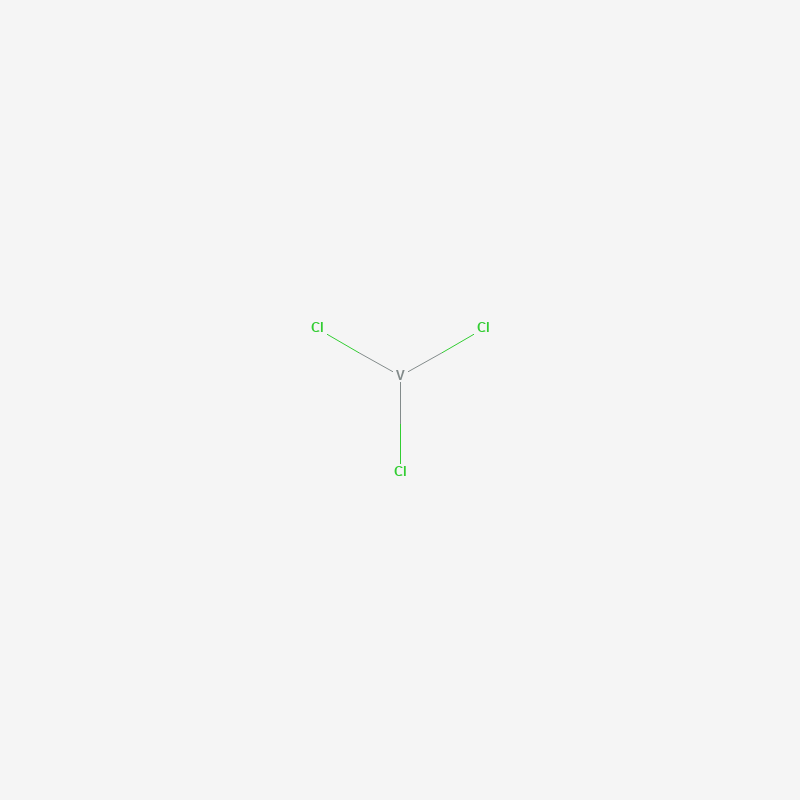
1.25×
vanadium(III) chloride Formula
- CAS Number
- 7718-98-1
- Molecular formula
- Cl3V
- Molecular weight
- 157.30
- Exact mass
- 155.850516
- IUPAC name
- trichlorovanadium
- SMILES
Cl[V](Cl)Cl- InChI
InChI=1S/3ClH.V/h3*1H;/q;;;+3/p-3- InChIKey
HQYCOEXWFMFWLR-UHFFFAOYSA-K
Data source: Pubchem
view
vanadium(III) chloride Synonyms (24 total)
CCRIS 8889
DTXCID0047951
DTXSID3064776
EINECS 231-744-6
NS00113730
RefChem:193663
SCHEMBL652506
trichlorovanadium
VANADIUM(3+) CHLORIDE
vanadium(3+) trichloride
Vanadium chloride (VCl3)
Vanadium(III) chloride
VANADIUM (III) CHLORIDE
Vanadium(III) chloride, 97%
Vanadium(III) chloride, anhydrous
Vanadium trichloride
231-744-6
7718-98-1
Q421260
UN2475
Vanadium trichloride [UN2475] [Corrosive]
Vanadium trichloride [UN2475] [Corrosive]
Vanadium Trichloride; Vanadium(3+) Chloride; Vanadium(III) Chloride
VCl3
vanadium(III) chloride Safety & hazards
Signal wordDanger
Hazard statements
- H302 (87.5%): Harmful if swallowed [Warning Acute toxicity, oral]
- H314 (100%): Causes severe skin burns and eye damage [Danger Skin corrosion/irritation]
- H302: Harmful if swallowed [Warning Acute toxicity, oral]
- H314: Causes severe skin burns and eye damage [Danger Skin corrosion/irritation]
- H318: Causes serious eye damage [Danger Serious eye damage/eye irritation]
- H370: Causes damage to organs [Danger Specific target organ toxicity, single exposure]
- H372: Causes damage to organs through prolonged or repeated exposure [Danger Specific target organ toxicity, repeated exposure]
- H402: Harmful to aquatic life [Hazardous to the aquatic environment, acute hazard]
- H412: Harmful to aquatic life with long lasting effects [Hazardous to the aquatic environment, long-term hazard]
Data sourced from PubChem
