vanadium(IV) chloride Chemical Formula
tetrachlorovanadium
vanadium(IV) chloride CAS No: 7632-51-1 vanadium(IV) chloride Molecular formula: Cl4V PubChem CID: 24273
Hazard
Danger
vanadium(IV) chloride Chemical Manufacturers and suppliers listings
No active product listings for vanadium(IV) chloride chemical yet.
vanadium(IV) chloride Structure
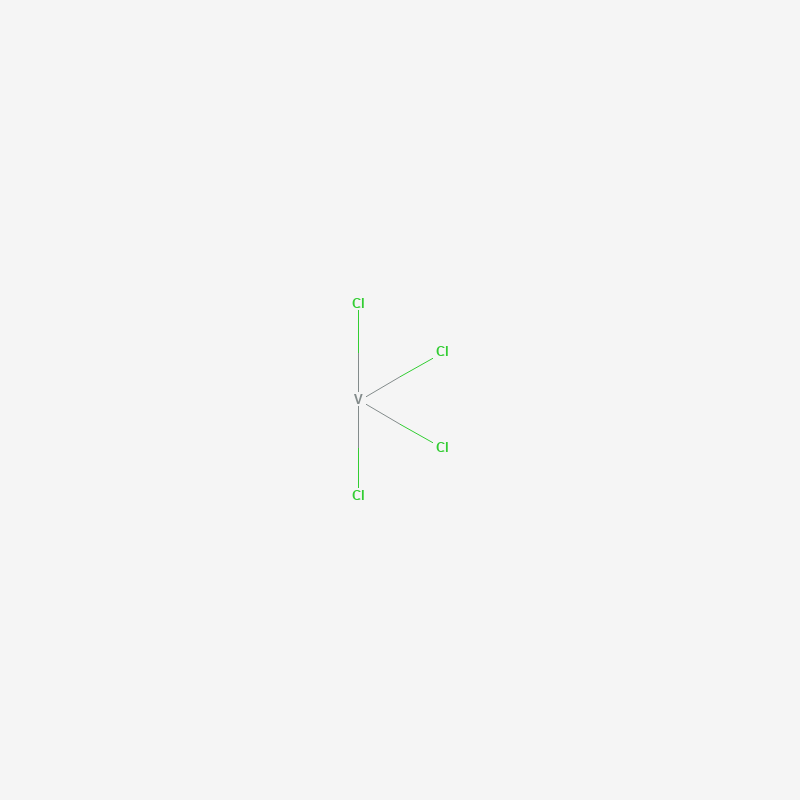
1.25×
vanadium(IV) chloride Formula
- CAS Number
- 7632-51-1
- Molecular formula
- Cl4V
- Molecular weight
- 192.7
- Exact mass
- 192.816418
- IUPAC name
- tetrachlorovanadium
- SMILES
Cl[V](Cl)(Cl)Cl- InChI
InChI=1S/4ClH.V/h4*1H;/q;;;;+4/p-4- InChIKey
JTJFQBNJBPPZRI-UHFFFAOYSA-J
Data source: Pubchem
view
vanadium(IV) chloride Industries & Uses
Textiles (Printing, Dyeing, or Finishing)
vanadium(IV) chloride Synonyms (23 total)
231-561-1
2I17MGM5YJ
7632-51-1
AI3-52346
DTXCID1047869
DTXSID0064757
EINECS 231-561-1
HSDB 1025
RefChem:193662
SCHEMBL320872
Tetrachlorovanadium
UNII-2I17MGM5YJ
vanadium(4+) tetrachloride
Vanadium chloride, (T-4)-
Vanadium chloride (VCl4)
Vanadium chloride (VCl4), (T-4)-
Vanadium chloride (VCl4), (T4)
Vanadium(IV) chloride
VANADIUM TETRACHLORIDE
VANADIUM TETRACHLORIDE [HSDB]
UN2444
Vanadium tetrachloride [UN2444] [Corrosive]
VCl4
vanadium(IV) chloride Safety & hazards
Signal wordDanger
Hazard statements
- H301 (97.6%): Toxic if swallowed [Danger Acute toxicity, oral]
- H311 (90.2%): Toxic in contact with skin [Danger Acute toxicity, dermal]
- H314 (100%): Causes severe skin burns and eye damage [Danger Skin corrosion/irritation]
- H331 (90.2%): Toxic if inhaled [Danger Acute toxicity, inhalation]
- H301: Toxic if swallowed [Danger Acute toxicity, oral]
- H314: Causes severe skin burns and eye damage [Danger Skin corrosion/irritation]
- H318: Causes serious eye damage [Danger Serious eye damage/eye irritation]
- H370: Causes damage to organs [Danger Specific target organ toxicity, single exposure]
- H372: Causes damage to organs through prolonged or repeated exposure [Danger Specific target organ toxicity, repeated exposure]
- H311: Toxic in contact with skin [Danger Acute toxicity, dermal]
- H331: Toxic if inhaled [Danger Acute toxicity, inhalation]
Data sourced from PubChem
