vanadium(V) oxide Chemical Formula
dioxovanadiooxy(dioxo)vanadium
vanadium(V) oxide CAS No: 1314-62-1 vanadium(V) oxide Molecular formula: O5V2 PubChem CID: 14814
Hazard
Danger
vanadium(V) oxide Chemical Manufacturers and suppliers listings
No active product listings for vanadium(V) oxide chemical yet.
vanadium(V) oxide Structure
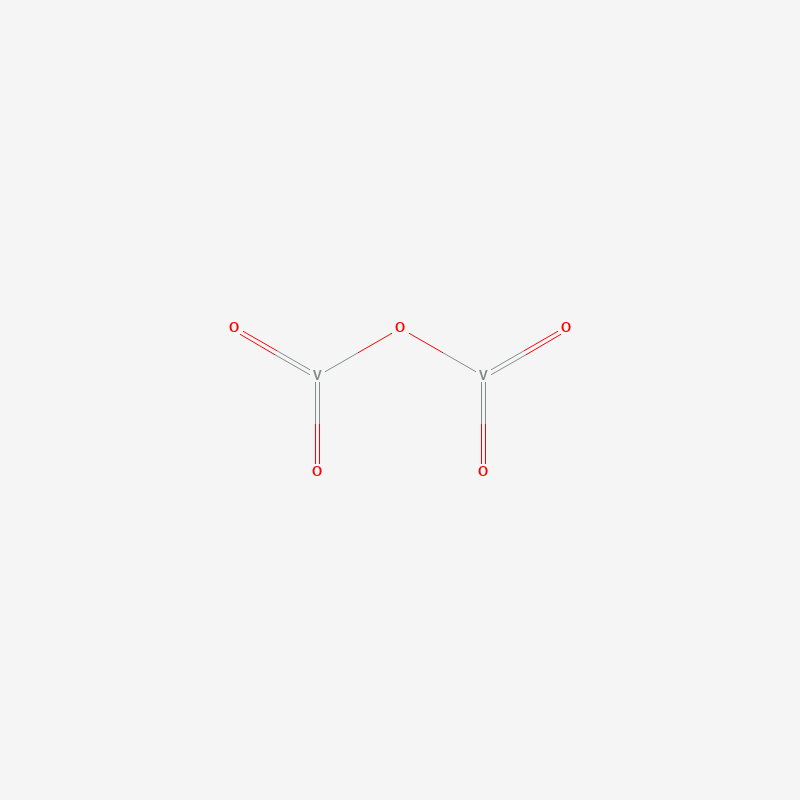
1.25×
Vanadium pentoxide (orthorhombic crystalline form) can cause cancer according to The National Toxicology Program.
vanadium(V) oxide Formula
- CAS Number
- 1314-62-1
- Molecular formula
- O5V2
- Molecular weight
- 181.88
- Exact mass
- 181.862488
- IUPAC name
- dioxovanadiooxy(dioxo)vanadium
- SMILES
O=[V](=O)O[V](=O)=O- InChI
InChI=1S/5O.2V- InChIKey
GNTDGMZSJNCJKK-UHFFFAOYSA-N
Data source: Pubchem
view
vanadium(V) oxide Industries & Uses
Welding
Petroleum Production and Refining
Mining
Cleaning Furnaces or Flues
Metal Extraction and Refining
Ceramics making
vanadium(V) oxide Synonyms (69 total)
11099-11-9
1314-62-1
215-239-8
AI3-52159
AKOS016370678
Anhydride vanadique
Anhydride vanadique [French]
BVG363OH7A
CCRIS 3206
CHEBI:30045
C.I. 77938
CI 77938
Divanadium pentaoxide
Divanadium pentoxide
Divanadium pentoxide fume
DTXCID303806
DTXSID2023806
EC 215-239-8
EINECS 215-239-8
EINECS 234-326-1
dioxovanadiooxy(dioxo)vanadium
FV53787
HSDB 1024
MFCD00011457
NS00074374
NSC 215206
Pentaoxodivanadium
Q409173
RCRA waste no. P120
RCRA waste number P120
RefChem:193655
SCHEMBL781255
UN2862
UNII-BVG363OH7A
V2O5
VANADIA
Vanadic acid anhydride
Vanadic anhydride
Vanadic anhydride fume
Vanadin(V) oxide
Vanadio, pentossido di
Vanadio, pentossido di [Italian]
vanadium (5) oxide
Vanadium dust (V2O5)
Vanadium fume (V2O5)
Vanadium oxide fume
Vanadium oxide (V2O5)
Vanadium oxide V2O5
Vanadium pentaoxide
Vanadium pentaoxide fume
Vanadiumpentoxid
VANADIUM PENTOXIDE
Vanadium pentoxide, nonfused form
Vanadium pentoxide, nonfused form [UN2862] [Poison]
Vanadiumpentoxid [German]
Vanadiumpentoxyde
Vanadium, pentoxyde de
Vanadium, pentoxyde de [French]
Vanadiumpentoxyde [Dutch]
Vanadium(V) oxide
Vanadium(V) oxide, >=98%
Vanadium(V) oxide, >=99.6% trace metals basis
Vanadium (V) oxide - 99.99%
Vanadium(V) oxide, 99.99% trace metals basis
Vanadium(V) oxide (99.99%-V)
Vanadium(V) oxide, purum, >=98.0% (RT)
Vandia
Wanadu pieciotlenek
Wanadu pieciotlenek [Polish]
vanadium(V) oxide Safety & hazards
Signal wordDanger
Hazard statements
- H301: Toxic if swallowed [Danger Acute toxicity, oral]
- H330: Fatal if inhaled [Danger Acute toxicity, inhalation]
- H335: May cause respiratory irritation [Warning Specific target organ toxicity, single exposure; Respiratory tract irritation]
- H341: Suspected of causing genetic defects [Warning Germ cell mutagenicity]
- H350: May cause cancer [Danger Carcinogenicity]
- H362: May cause harm to breast-fed children [Reproductive toxicity, effects on or via lactation]
- H372: Causes damage to organs through prolonged or repeated exposure [Danger Specific target organ toxicity, repeated exposure]
- H411: Toxic to aquatic life with long lasting effects [Hazardous to the aquatic environment, long-term hazard]
- H301 (25.3%): Toxic if swallowed [Danger Acute toxicity, oral]
- H302 (71.3%): Harmful if swallowed [Warning Acute toxicity, oral]
- H318 (28.7%): Causes serious eye damage [Danger Serious eye damage/eye irritation]
- H330 (25.2%): Fatal if inhaled [Danger Acute toxicity, inhalation]
- H332 (74.7%): Harmful if inhaled [Warning Acute toxicity, inhalation]
- H335 (99.9%): May cause respiratory irritation [Warning Specific target organ toxicity, single exposure; Respiratory tract irritation]
- H341 (100%): Suspected of causing genetic defects [Warning Germ cell mutagenicity]
- H350 (25.3%): May cause cancer [Danger Carcinogenicity]
- H361 (74.8%): Suspected of damaging fertility or the unborn child [Warning Reproductive toxicity]
- H362 (25.1%): May cause harm to breast-fed children [Reproductive toxicity, effects on or via lactation]
- H372 (99.7%): Causes damage to organs through prolonged or repeated exposure [Danger Specific target organ toxicity, repeated exposure]
- H411 (100%): Toxic to aquatic life with long lasting effects [Hazardous to the aquatic environment, long-term hazard]
- H302 (33.3%): Harmful if swallowed [Warning Acute toxicity, oral]
- H319 (33.3%): Causes serious eye irritation [Warning Serious eye damage/eye irritation]
- H332 (33.3%): Harmful if inhaled [Warning Acute toxicity, inhalation]
- H335 (33.3%): May cause respiratory irritation [Warning Specific target organ toxicity, single exposure; Respiratory tract irritation]
- H318: Causes serious eye damage [Danger Serious eye damage/eye irritation]
- H361: Suspected of damaging fertility or the unborn child [Warning Reproductive toxicity]
- H370: Causes damage to organs [Danger Specific target organ toxicity, single exposure]
- H401: Toxic to aquatic life [Hazardous to the aquatic environment, acute hazard]
- H410: Very toxic to aquatic life with long lasting effects [Warning Hazardous to the aquatic environment, long-term hazard]
- H373: May causes damage to organs through prolonged or repeated exposure [Warning Specific target organ toxicity, repeated exposure]
- H300: Fatal if swallowed [Danger Acute toxicity, oral]
- H319: Causes serious eye irritation [Warning Serious eye damage/eye irritation]
- H332: Harmful if inhaled [Warning Acute toxicity, inhalation]
- H340: May cause genetic defects [Danger Germ cell mutagenicity]
- H351: Suspected of causing cancer [Warning Carcinogenicity]
- H302: Harmful if swallowed [Warning Acute toxicity, oral]
Data sourced from PubChem
